
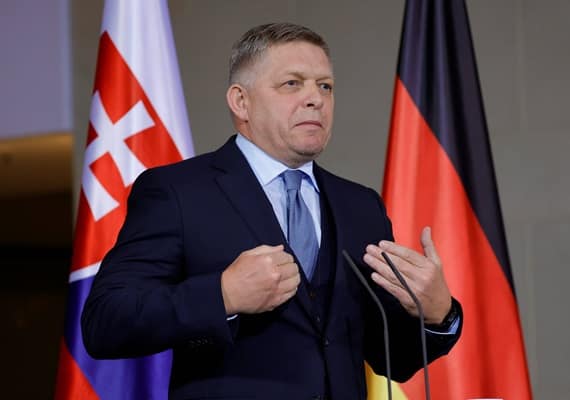
Lithuania, Latvia and Estonia have moved to block Slovak Prime Minister Robert Fico from using their airspace to fly to Moscow for Russia’s Victory Day commemorations in May, a fresh sign of deepening divisions within the European Union over relations with the Kremlin.
The coordinated refusal by the Baltic states effectively disrupts Fico’s planned route to Moscow for the May 9 parade, compelling him to seek alternative flight paths.
Fico confirmed that both Lithuania and Latvia had already denied permission for his aircraft to enter their airspace, telling reporters that EU member states were preventing the prime minister of another EU country from flying over their territories.
On April 19, Estonia also confirmed it would refuse overflight clearance. Foreign Minister Margus Tsahkna said Tallinn would not allow its airspace to be used for flights to Moscow for the Victory Day event, which he described as an occasion “aimed at glorifying the aggressor”.
The annual May 9 parade in Russia marks the Soviet victory over Nazi Germany and is used by the Kremlin as a major display of military power and national pride. Western governments have increasingly boycotted the event since Russia’s invasion of Ukraine, with many EU states instead observing Victory in Europe Day on May 8, Kyiv Independent reported.
Fico criticised the decision, claiming he would “find another route as he did last year”, when he said Estonia had previously obstructed his travel plans.
The Slovak leader has maintained a more conciliatory stance towards Moscow than many of his European counterparts, and has been one of the few EU heads of government willing to attend events in Russia since the war in Ukraine began.
The diplomatic row comes amid broader tensions within the EU over policy towards Russia. Hungary and Slovakia have at times resisted further sanctions and opposed aspects of the EU’s military and financial support for Kyiv.
Fico has previously aligned himself with Hungarian Prime Minister Viktor Orbán, though Orbán recently suffered a political setback following his election defeat.
Separately, Slovakia has warned it may block future EU sanctions packages unless it receives guarantees over Russian energy supplies transiting through Ukraine via the Druzhba pipeline, underscoring ongoing divisions over energy security and the bloc’s approach to Moscow.


Leave a Comment