
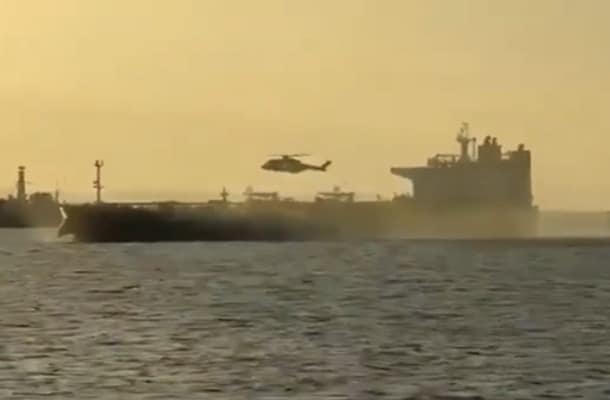
Questions over the authenticity of dramatic Royal Marines footage showing the seizure of a Russian “shadow fleet” tanker have sparked a political row, with MPs and military figures accusing the Ministry of Defence of allowing operational material to drift into staged publicity.
The operation, announced by Sir Keir Starmer on Sunday, was the first UK-led interdiction of its kind and resulted in the arrest of a 38-year-old Indian national on suspicion of sanctions breaches. Royal Marines, supported by the National Crime Agency, boarded the vessel in a coordinated assault involving helicopter insertions, fast-roping and internal clearance of the ship’s compartments.
But the release of edited footage showing troops descending onto the tanker and moving through cabins has prompted allegations that parts of the operation were choreographed for the cameras rather than captured organically during the raid.
Conservative MP and Army veteran Ben Obese-Jecty raised “serious questions” about the sequence of events depicted, pointing to apparent inconsistencies in the video, including the positioning of a cameraman during internal clearance and apparent repetition of movements through confined spaces.
“How is the cameraman ahead of the Marines clearing the stairwell?” he asked, while suggesting the Government risked undermining a legitimate military success through what he called a “desperate need for a win”.
The MP stressed he did not dispute that the tanker had been seized or that the operation had involved genuine risk, but said questions over presentation would need to be addressed.
For the first time, Great Britain 🇬🇧 seized a Russian ship: a video of the night operation by British forces from the tanker "Smyrtos". pic.twitter.com/VxCj3dq61a
— Shaun Pinner (@ShaunPinnerUA) June 14, 2026
The Ministry of Defence strongly rejected the suggestion that the operation had been staged, insisting the footage was recorded only after initial boarding teams had secured key areas of the vessel.
Officials said this approach was necessary to ensure safety and operational security, allowing cameras to accompany follow-on clearances without compromising the mission. They added that multiple boarding waves meant personnel were inserted at different stages, enabling legitimate recording of the operation from several angles.
“There were multiple points at which personnel fast-roped onto the vessel,” a spokesman said, adding that the material reflected “the level of diligence and detail required to safely clear a vessel”.
However, questions have persisted after audio from the footage appeared to capture coordination between personnel and a cameraman, including instructions to “hold that” during searches of crew cabins.
The vessel remains under guard while investigations continue. Twenty-four Georgian and Indian crew members are still aboard and are assisting authorities. The National Crime Agency confirmed the arrest of a 38-year-old Indian national on suspicion of offences under the Russia Regulations, with the suspect held in custody for interview.
The operation forms part of an intensified UK effort to disrupt Russia’s so-called shadow fleet — ageing, often opaque tankers used to transport oil outside Western sanctions regimes. Ministers say the network is a key source of revenue for Moscow’s war in Ukraine and has become an increasing focus of maritime enforcement activity.
Sir Keir has pledged further action against the fleet, while Defence Secretary Dan Jarvis, appointed following recent turmoil at the Ministry of Defence, praised the raid as an example of “skill, professionalism and courage”.
But the controversy comes at a sensitive moment for the Government’s defence agenda, with tensions still simmering over military funding and the delayed Defence Investment Plan. The Treasury is expected to allocate £13.5bn to the Ministry of Defence, a figure some officials privately concede may fall short of the requirements set out by military planners.
For ministers, the incident risks shifting attention away from a rare operational success and back onto questions of presentation, political pressure and the increasingly blurred line between modern warfare and its public portrayal.


Leave a Comment