
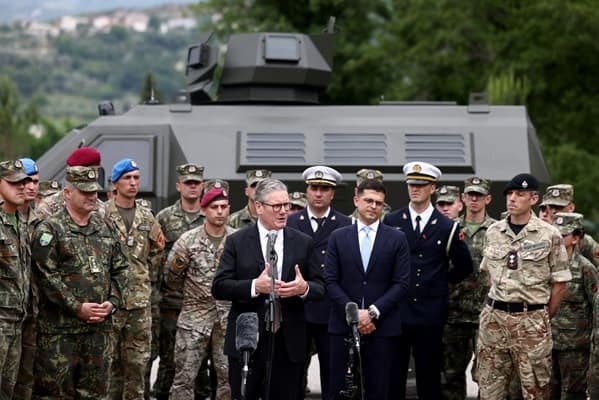
The political fallout from John Healey’s resignation is threatening to engulf Sir Keir Starmer’s government as Downing Street prepares to resist fresh demands for a major increase in defence spending, despite mounting warnings about Britain’s military readiness.
Just days after the former Defence Secretary delivered a devastating parting blow to the Prime Minister, his successor now faces the same battle that forced his predecessor from office.
Dan Jarvis entered the Ministry of Defence under extraordinary circumstances. Catapulted into one of the most sensitive jobs in government after Healey’s dramatic resignation, the former soldier was handed a brief that comes with immense responsibility and seemingly limited financial firepower.
His immediate challenge is stark.
Britain faces a deteriorating global security environment, Russia continues to rearm, conflict in the Middle East has intensified, and NATO allies are demanding greater commitments from member states.
Yet despite those pressures, ministers are signalling that no substantial increase beyond the £13.5 billion already allocated is likely.
The stance risks reopening the very dispute that brought down Healey.
In his resignation letter, the former Defence Secretary accused both Sir Keir Starmer and Chancellor Rachel Reeves of failing to provide the resources required to meet the threats confronting Britain. His warning that the Defence Investment Plan fell “well short” of what was needed sent shockwaves through Westminster and triggered wider questions about the Government’s priorities.
Now attention has shifted to whether Jarvis can succeed where Healey failed.
According to reports, the new Defence Secretary spent his first weekend in office scrutinising the long-delayed Defence Investment Plan with senior officials before preparing to make his case to both Number 10 and the Treasury.
But Downing Street appears unwilling to reopen the spending envelope.
Instead, Jarvis is expected to identify savings and reallocations from within his own department, a prospect likely to provoke frustration among military leaders who have repeatedly warned that Britain cannot cut its way to greater readiness.
The political opposition has seized upon the row.
James Cleverly delivered a scathing assessment of Jarvis’s position, arguing that the new Defence Secretary accepted the role knowing he would immediately be constrained by Treasury orthodoxy.
His accusation that Jarvis will arrive at NATO discussions with “no credibility” reflects a broader Conservative attack line that Labour is failing to match its rhetoric on national security with the resources required to deliver it.
The criticism cuts particularly deeply because it strikes at an issue Sir Keir has repeatedly sought to emphasise: his commitment to defence and Britain’s role within NATO. Indeed, the Prime Minister has frequently spoken of the growing threats facing Europe and warned publicly about the possibility of future Russian aggression. Yet critics argue that such warnings ring hollow if they are not accompanied by the funding necessary to strengthen Britain’s armed forces.
The situation has been further complicated by reports of tensions elsewhere within the Cabinet. Last week it emerged that Energy Secretary Ed Miliband had resisted pressure to identify savings that could be redirected towards defence spending, highlighting the increasingly difficult choices facing ministers as competing priorities collide.
The result is a government pulled in multiple directions. On one side stand defence chiefs, former military commanders and an increasingly vocal group of politicians demanding a rapid expansion of military spending. On the other hand, sits a Treasury determined to maintain fiscal discipline at a time when public finances remain under intense pressure. Caught in the middle is Dan Jarvis.
The former Parachute Regiment officer was brought into government with a reputation for competence and credibility on defence matters. Yet within days of taking office he faces a test that may define his tenure. If he cannot secure additional resources, critics will argue he has merely inherited Healey’s impossible brief.
If he challenges the Treasury too aggressively, he risks exposing fresh divisions at the heart of government. For Sir Keir Starmer, the stakes are equally high. Having already lost one Defence Secretary over military funding, a prolonged battle with his successor would raise uncomfortable questions about whether his government is prepared to match its warnings about global threats with the investment required to confront them.
As Nato allies prepare for another crucial summit and international tensions continue to rise, the argument over Britain’s defence budget is no longer just a dispute about numbers. It has become a test of the Government’s credibility on national security itself.


Leave a Comment