
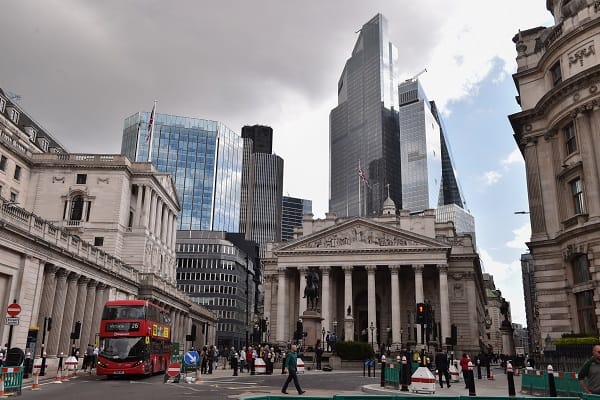
The Bank of England is facing one of its most difficult balancing acts since the inflation crisis, with policymakers caught between a weakening economy and a fresh surge in energy prices driven by the conflict in the Middle East.
When officials gather this week to set interest rates, they are expected to leave borrowing costs unchanged at 3.75 per cent. Yet behind the apparent calm lies growing concern that Britain could be heading towards an uncomfortable period of stagnant growth and rising inflation.
Only months ago, Threadneedle Street appeared firmly on course to continue cutting interest rates after inflation had eased significantly from its post-pandemic peak. Now, however, the outbreak of war involving Iran has dramatically altered the economic landscape.
The conflict has sent shockwaves through global energy markets, pushing up oil prices and reigniting fears over household bills, transport costs and wider inflationary pressures.
For the Monetary Policy Committee, the dilemma is stark.
Raise interest rates too aggressively, and policymakers risk choking off an economy already showing signs of strain. Move too slowly, and inflation could become embedded once again, forcing even tougher action further down the line.
Fresh figures released last week highlighted the scale of the challenge.
Britain’s economy contracted by 0.1 per cent in April, ending an eight-month run of growth and providing the clearest indication yet that geopolitical turmoil is beginning to weigh on economic activity.
The slowdown has reinforced concerns that the strong growth recorded earlier in the year may prove short-lived.
Businesses are already grappling with higher energy costs, while households face the prospect of rising fuel bills and increased pressure on disposable incomes.
Economists increasingly fear that Britain could find itself caught in a familiar and unwelcome cycle where growth stalls even as inflation remains stubbornly elevated.
That prospect helps explain why the Bank is expected to proceed cautiously despite growing price pressures.
Suren Thiru, chief economist at ICAEW, believes policymakers have little choice but to pause while assessing the full impact of events in the Middle East.
The uncertainty surrounding energy markets, combined with weakening domestic economic indicators, makes any immediate shift in policy particularly risky.
Yet the longer the conflict drags on, the more difficult the Bank’s position becomes.
The European Central Bank has already moved in a more hawkish direction, raising rates for the first time in almost three years and explicitly citing inflationary pressures arising from the conflict.
Across the Atlantic, the US Federal Reserve is also expected to hold rates steady, reflecting similar concerns about the economic consequences of prolonged instability.
For Britain, however, the challenge may be more acute.
The country remains heavily exposed to global energy prices, while economic growth was already proving fragile before the latest geopolitical shock.
Sanjay Raja of Deutsche Bank believes the Bank of England is now walking an increasingly narrow path between deteriorating economic conditions and mounting inflation risks.
His assessment reflects growing concern among economists that the energy shock is no longer a temporary disturbance but a potentially lasting feature of the economic outlook.
Should oil and gas prices remain elevated throughout the summer, pressure on inflation could intensify sharply.
That would leave policymakers facing a deeply uncomfortable question: whether to prioritise supporting growth or restoring price stability.
For Chancellor Rachel Reeves and Sir Keir Starmer, the timing could hardly be worse.
The Government is already facing scrutiny over sluggish growth, stretched public finances and mounting pressures on living standards.
A renewed inflation problem would complicate those challenges further, squeezing households and businesses just as ministers attempt to convince voters that the economy is turning a corner.
The immediate expectation remains that rates will stay unchanged this week.
But the debate inside the Bank is shifting.
Only a few months ago, the question was how quickly rates could be cut.
Now the question increasingly being asked is whether the next move might ultimately have to be up.
That alone underlines how profoundly the economic outlook has changed since the first missiles were fired in the Middle East.


Leave a Comment