
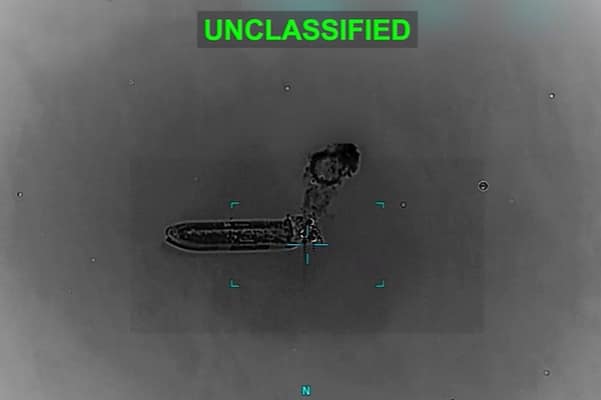
India’s shipping minister Sarbananda Sonowal confirmed that three Indian sailors were killed when a United States strike hit a tanker off the coast of Oman.
The announcement brings tragic confirmation after the crew members were initially reported missing following the attack on the MT Settebello, a Palau-flagged tanker struck by US forces in the waters near the Strait of Hormuz.
New Delhi’s foreign ministry had earlier said three Indian nationals could not be accounted for after the incident, while confirming that 21 other crew members had been safely rescued.
The vessel is understood to have been targeted in a US military operation aimed at enforcing Washington’s blockade of Iranian oil exports. According to US Central Command, an American aircraft fired precision munitions at the tanker’s engine room after it allegedly attempted to breach the blockade while carrying Iranian crude.
Officials said warnings were issued to the crew prior to the strike.
The attack marks the eighth commercial vessel to be targeted by US forces operating in waters around Iran, underscoring the growing intensity of maritime confrontations in the region.
India’s foreign ministry statement on the missing sailors did not directly address US involvement or the wider blockade campaign, reflecting the diplomatic sensitivity surrounding the incident.
The tanker strike comes amid a rapid escalation between Washington and Tehran, with both sides exchanging fire for a second consecutive night.
US Central Command said it had conducted further strikes against Iranian surveillance systems, communications infrastructure and air defence positions, including targets in Bandar Abbas, Sirik and the Karaj region.
American officials described the operations as retaliation for what they called continued Iranian aggression in the region. They also rejected Iranian claims that a US warship had been hit in the Strait of Hormuz.
Tehran, meanwhile, ordered the Islamic Revolutionary Guard Corps to target US-linked assets across the Middle East. Strikes were reported on facilities in Jordan, Kuwait and Bahrain, prompting Gulf states to activate air defences and Kuwait to close its airspace.
Before the latest exchanges, President Donald Trump signalled further military action, telling reporters: “We hit them hard yesterday, and we’re going to hit them again hard today.”
In a subsequent interview with Fox News, Mr Trump claimed he had been in direct contact with Iranian officials who had requested a halt to the strikes. That claim was swiftly denied by Tehran, which said no such discussions had taken place.
The contradictory accounts add to growing uncertainty in a region already on edge, as maritime routes around the Gulf become an increasingly active theatre in the US-Iran confrontation.


Leave a Comment