
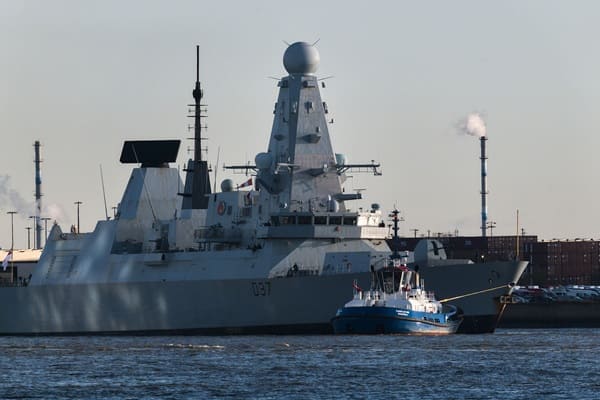
Sir Keir Starmer is facing mounting criticism after reports emerged that Britain could abandon plans for a new generation of Royal Navy destroyers as ministers scramble to balance the books ahead of a long-awaited defence spending announcement.
The Type 83 destroyer programme, intended to replace the Royal Navy’s ageing Type 45 fleet from the mid-2030s, is reportedly among a growing list of major projects under threat as a bitter funding dispute continues between the Ministry of Defence and the Treasury.
Defence sources have warned that the programme could be delayed indefinitely or even scrapped altogether as officials attempt to squeeze ambitious military modernisation plans into a far smaller budget than military chiefs believe is necessary.
The prospect of cancelling Britain’s next generation of air-defence warships is likely to alarm defence experts, who warn that the Royal Navy is already operating with a stretched surface fleet at a time of growing international instability.
It would also raise fresh questions about whether Labour’s repeated pledges to rebuild Britain’s military can survive the reality of increasingly severe financial pressures.
The Type 83 destroyer was conceived as the successor to the Royal Navy’s six Type 45 vessels, which currently provide the fleet’s primary air-defence capability.
Although still in the early stages of development, the warships were expected to become some of the most technologically advanced vessels ever built by Britain.
Plans included cutting-edge ballistic missile defence systems, enhanced air-defence capabilities, advanced artificial intelligence integration and the ability to carry future hypersonic weapons.
The ships would have formed a critical part of Britain’s maritime deterrent at a time when military planners increasingly warn of threats from Russia, China and rogue states armed with sophisticated missile technology.
However, senior military sources now suggest the programme has slipped down the Government’s priority list as ministers focus on rapidly expanding drone warfare capabilities and other emerging technologies.
Naval chiefs are understood to be pushing a “hybrid navy” model that combines conventional warships with large numbers of autonomous and remotely operated systems.
The success of unmanned systems in conflicts from Ukraine to the Middle East has accelerated calls for a fundamental rethink of future naval warfare.
Any significant delay to the Type 83 programme would force the Royal Navy to rely on its current destroyer fleet for longer than originally intended.
That prospect has generated concern within defence circles.
The Type 45 destroyers have long suffered from reliability issues, particularly during deployments in warmer climates.
Several vessels have experienced high-profile propulsion failures over the past decade, resulting in costly repairs and operational disruption.
HMS Dragon was among those affected, suffering repeated technical difficulties while deployed in support of British operations in the eastern Mediterranean and Middle East.
While upgrades have improved reliability, extending the lifespan of the existing fleet risks increasing maintenance costs and operational strain as geopolitical tensions continue to rise.
The uncertainty surrounding the Type 83 programme reflects a much wider battle over defence spending inside Whitehall.
Defence Secretary John Healey is understood to have argued that the Ministry of Defence requires approximately £18 billion in additional funding simply to deliver the capabilities identified in last year’s Strategic Defence Review.
Some estimates suggest the total cost of implementing the review’s recommendations could approach £28 billion.
Treasury officials, however, are believed to be resisting such demands amid wider concerns about public finances and economic growth.
Reports indicate ministers are examining a significantly smaller settlement worth closer to £12 billion, raising fears that major procurement programmes could be postponed or cancelled.
The Department for Transport and the Department for Energy have reportedly been instructed to identify savings from infrastructure projects to help fund defence priorities.
The continuing delays to the Defence Investment Plan have already sparked criticism from military figures and political opponents.
Mark Francois, the Conservative defence spokesman, accused Labour of undermining Britain’s armed forces through a combination of spending cuts and indecision.
“Their much-vaunted Defence Investment Plan has still not been published,” he said.
“This Labour Government is failing the defences of this country – literally both above and below the waves.”
The criticism follows warnings from Lord Robertson, the former Nato secretary-general and architect of the Strategic Defence Review.
In a stark assessment of Britain’s security position, he warned that the country was increasingly vulnerable in an era of mounting international threats.
“We are under-prepared. We are under-insured. We are under attack. We are not safe,” he said.
“Britain’s national security and safety is in peril.”
For Sir Keir, the destroyer controversy threatens to expose the growing gap between strategic ambitions and fiscal reality.
Ministers have repeatedly promised the largest strengthening of Britain’s armed forces in a generation while simultaneously maintaining strict fiscal discipline.
Yet as the Defence Investment Plan approaches publication, difficult choices are emerging.
The debate is no longer simply about how much Britain spends on defence, but which capabilities ministers are willing to sacrifice.
For naval commanders, the prospect that the Royal Navy’s future flagship air-defence programme could become one of those casualties will be deeply troubling.
With Nato allies urging Britain to strengthen its military contribution and global instability continuing to worsen, any decision to delay or abandon the Type 83 programme risks becoming a powerful symbol of the wider struggle to match defence rhetoric with defence reality.





Leave a Comment