
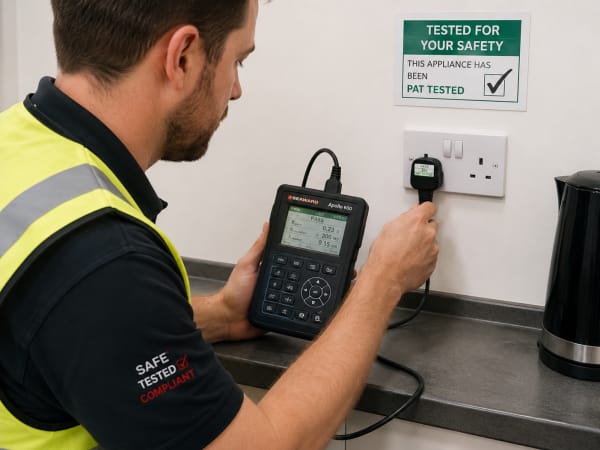
Almost no one gives electrical gear in a typical office or workshop a second thought. It gets plugged in on day one and stays there for years, accumulating dust behind desks and under counters, until a frayed cable or a cracked plug turns into an actual problem. The HSE logs around 1,000 electrical accidents at work annually, with about 25 proving fatal. Many of those incidents involve portable appliances that hadn’t been inspected in months, or fixed equipment left to deteriorate without any maintenance routine at all. The root cause is almost always the same: equipment that everyone assumes is fine because it was working fine yesterday.
For most small and mid-sized businesses, the traditional answer has been to book an external contractor once a year, hand over access to the building for a day, and hope nothing dangerous goes unnoticed in the gap between visits. That model is losing ground, though, as a growing number of firms now opt to bring PAT testing in-house instead. So what’s driving the change, and does the maths (and safety standards) actually hold up?
What an annual contractor visit really costs
On the face of it, outsourcing PAT testing looks simple. You book a contractor, they turn up, test your equipment, and you get your certificates: done.
But the true cost often runs higher than the invoice suggests. Most contractors charge per item tested, and for a typical office with 80 to 150 portable appliances, that can come in anywhere from £150 to £400 depending on location and volume. Add in the disruption of having someone in your workspace for the best part of a day, the admin of coordinating access and the fact that you’ll pay the same again next year, and the bill starts to feel less like a bargain.
There’s also the timing problem. Annual visits create a 12-month gap where new equipment goes untested. If you’ve bought new monitors in March and your contractor isn’t due until October, those items won’t be checked for months. And if a faulty lead or damaged plug causes an incident in the meantime, the question you’ll face from an HSE inspector won’t be about your annual schedule. It’ll be about whether you were maintaining your equipment properly.
How the in-house numbers compare
Training a member of staff to carry out PAT testing involves an upfront cost, typically around £200 to £300 for a one-day course, plus the price of a PAT tester, which can range from around £200 for a basic unit up to £500 or more for a model with automatic test sequences and data logging. Call it £500 to £700 all in to get started.
That sounds like more than a single contractor visit. But here’s where it changes. Once trained, that person can test equipment as often as needed, at no additional cost per test. New laptop arrives on Monday? It gets tested on Tuesday. Faulty extension lead spotted during a visual check? It gets pulled and replaced the same day. There’s no waiting, no scheduling, no second invoice.
For a business with even a moderate amount of portable equipment, the upfront investment tends to pay for itself within the first year or two. After that, the ongoing costs are minimal: replacement test leads, labels, and annual calibration of the tester (typically £30 to £60).
What the law actually requires
There’s a common misunderstanding that only a qualified electrician can carry out PAT testing, or that businesses need some kind of licence to do it internally. Neither is true.
The Electricity at Work Regulations 1989 require employers to ensure that electrical equipment is maintained to prevent danger. That duty is absolute, with no “so far as is reasonably practicable” qualifier. But the regulations don’t prescribe how you do that, how often, or who does it. There’s no mandated frequency, and no requirement for formal qualifications. What the law does require is competence, meaning the person carrying out the testing understands the equipment, the tests and the risks well enough to do it safely and correctly.
In practice, that competence usually comes through training. A practical one-day PAT Testing Training Course covering visual inspection, earth continuity and insulation resistance testing is the standard route for most people, and no prior electrical background is needed to attend. By the end of the day, an office manager, facilities assistant or health and safety lead can carry out the same tests a contractor would.
Why flexibility matters more than most people think
One of the biggest advantages of in-house testing isn’t the cost saving. It’s the ability to act quickly.
Think about how equipment actually moves through a business. New items get bought throughout the year. Old items get moved between desks, offices or sites. Temporary setups appear for events, exhibitions and seasonal demand. Personal devices get plugged in. Extension leads get daisy-chained in ways they shouldn’t be.
An annual contractor visit can’t keep up with any of that. It’s a snapshot of one day, and within weeks the picture has already changed. A trained staff member, on the other hand, can carry out visual inspections whenever something new arrives, pull anything that looks damaged and schedule formal tests at intervals that match how the equipment is actually used.
That kind of responsiveness doesn’t just reduce risk. It also creates a much stronger paper trail if you’re ever asked to demonstrate that your equipment maintenance was reasonable and up to date.
Who should consider it
In-house PAT testing isn’t the right fit for every organisation. If you’ve got thousands of appliances spread across multiple large sites, a dedicated contractor with a team and commercial-grade equipment will probably still make more sense. The same goes for businesses with complex or specialised electrical equipment that needs expert assessment.
But for the majority of SMEs, schools, charities, churches, landlords and co-working spaces, training one or two people internally is a realistic and cost-effective option. It puts you in control of your own compliance calendar instead of relying on someone else’s.
What happens when the HSE comes knocking
Here’s the thing most business owners don’t consider until it’s too late: if there’s an electrical incident at your premises and the HSE investigates, the burden of proof sits with you. You’ll need to show that you took reasonable steps to maintain your equipment and prevent danger. That means records, test results and evidence that the person doing the testing was competent.
An annual contractor certificate from eight months ago won’t always cut it, especially if the equipment involved was bought after the last visit. But a log showing regular in-house checks, with test dates tied to when items actually entered service, tells a very different story. It shows a business that was paying attention, not just ticking a box once a year and hoping for the best.





Leave a Comment