
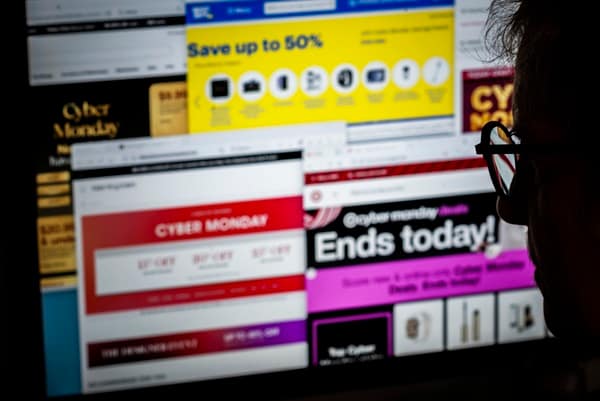
Most UK brands will lose Black Friday this year, and they will lose it in August. Not in November, when the ads go live and the discounts drop – but now, in the quiet weeks when nobody is watching. Black Friday is not an event you run. It is an exam you sit. November is simply when the results are posted.
That is not how most companies treat it. The standard playbook is to decide the discount in October, brief the agency in November, buy as much traffic as the budget allows and hope the spike covers the margin. It feels like strategy because it is busy. It is actually a queue – everyone doing the same thing, at the same time, to the same shoppers, with the same lever.
The maths has quietly changed
Look at what the numbers are actually saying. PwC went into last Black Friday expecting UK spending of £6.4bn – up just 1.5% on the previous year. Flat, in real terms. But underneath the flat total, two things moved sharply: the average shopper was expected to spend £262, up 13% – even as the share of consumers interested in Black Friday at all fell from 53% to 46%.
Read those three numbers together and the story is unmistakable. The casual bargain-hunter is drifting away. The pie is not growing. What remains is a smaller pool of more committed shoppers, each spending more – and they are not committed to Black Friday. They are committed to particular brands.
Platform data says the same thing, louder. Across the 2025 Black Friday–Cyber Monday period, Klaviyo reported that revenue from repeat customers grew 13.5% year on year – outpacing revenue from new buyers – and that the brands offering the smallest discounts grew fastest. Sitewide discounting actually fell 10%, and demand held anyway. Email and SMS alone drove 42% of attributed revenue.
None of that describes a discount contest. It describes a loyalty harvest. The brands that won November had spent the previous six months building something worth harvesting.
Deep discounts are a tax on weak relationships
Here is the reframe I push on every founder who will listen: the offer is a contract, not a discount. Whatever terms you set at the door define the customer you let in. Recruit at 40% off and you have not bought a customer; you have rented a transaction from someone whose loyalty belongs to the number, not the brand. They churn on schedule the moment full price returns. We call this discount-and-run, and brands that live on it re-buy the same “growth” every quarter at rising ad prices.
There is a simple way to see whether this is you. Split last year’s Black Friday cohort from your full-price customers and compare repeat rates at ninety days. If the discounted cohort’s rate is a fraction of the rest, you did not grow last November. You hired revenue by the hour.
The economics of the alternative are not subtle. Research popularised by Bain & Company in Harvard Business Review found that improving customer retention by five points lifts profit by anywhere from 25% to 95%. A brand that enters November with a warm list, working automation and a base of second-time buyers does not need to out-discount anyone. It needs to show up in the inbox it already owns.
What Black Friday winners do in August
Four moves, in the order I would make them. None requires new software; all of them require starting before September.
First, build the audience you will actually sell to. List growth compounds slowly: the subscribers you earn in August are the buyers you message free in November. If more than 40% of peak revenue arrives through email and SMS, the channel you neglect all summer is the channel you cannot conjure in week 47.
Second, fix the flows before the flood. Welcome, abandoned checkout, browse and post-purchase automation do their work silently – and at peak they carry more weight than any single campaign. Sending the year’s most expensive traffic through broken automation is paying to fill a leaking bucket. Audit it now, while a mistake costs you a Tuesday rather than the quarter.
Third, warm the base. Deliverability is earned, not switched on. A list that has heard nothing since spring, suddenly hit with daily sends in late November, goes to spam – and inbox providers remember. Consistent, segmented sending through autumn is what buys you the right to be seen in December.
Fourth, design the offer as a contract you want to keep. The repeat buyers in Klaviyo’s data were responding to early access, exclusive drops and VIP perks – recognition, not markdowns. Give your list first access instead of your deepest cut, and attach continuity to the sale: a subscription option, a replenishment bundle, a reason the November buyer shows up again in January. You are not maximising a day. You are recruiting a cohort.
November is cohort intake, not revenue day
The most useful thing a founder can do this month is change what Black Friday is for. It is not your revenue day; it is your intake day. Judge it the way we judge it at YOCTO, the retention agency I run: not by what the weekend takes, but by what it leaves behind – how many of those buyers make a second purchase by February, and at what margin. The discount decides the day. The relationship decides the year.
So sit the exam early. And start with the one number most brands cannot answer: of everyone who bought from you last Black Friday, how many ever bought from you again? If you do not know, August is when you still have time to change the answer.
Bio: George Kapernaros is the founder and CEO of YOCTO, a Klaviyo Elite retention and lifecycle marketing agency for fast-growing DTC and subscription brands. He created the LTV Parthenon framework and writes on subscription economics for the Forbes Business Council and the Fast Company Executive Board.


Leave a Comment