
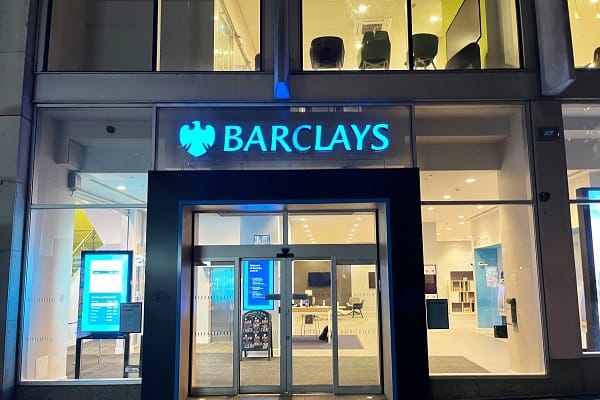
Barclays delivered stronger-than-expected first-half earnings after a surge in investment banking activity offset rising provisions for bad loans, offering a measure of resilience despite a weakening outlook for the UK economy.
The lender reported pre-tax profits of £6.1 billion for the first six months of 2026, a 17 per cent increase from £5.2 billion a year earlier and ahead of analysts’ expectations of £5.9 billion.
Performance was underpinned by robust growth across its core businesses.
Income at the UK bank rose 8 per cent to £4.5 billion, supported by stronger business lending and mortgage demand, while investment banking income climbed 11 per cent to £8 billion as heightened market volatility and an increase in corporate dealmaking boosted trading and advisory fees.
The investment banking division benefited from increased client activity during a period marked by geopolitical uncertainty, including the US-Israel conflict with Iran, alongside a steady flow of acquisitions involving UK-listed companies.
Barclays also reported continued momentum in domestic lending. Gross mortgage lending reached a record £10 billion in the second quarter, up from £7.7 billion in the previous three months, while UK lending balances increased 5 per cent year-on-year.
The stronger operating performance was partly offset by higher credit impairment charges, which rose to £1.4 billion from £1.1 billion a year earlier. The increase included a one-off £228 million provision linked to the collapse of property lender Market Financial Solutions earlier this year.
Despite resilient lending activity, Barclays lowered its forecast for UK economic growth in 2026 to 0.4 per cent, citing persistent geopolitical uncertainty, volatile US trade policy and a more inflationary environment.
Chief executive C.S. Venkatakrishnan said discussions with Chancellor John Healey had reinforced the government’s commitment to economic growth while maintaining fiscal discipline, adding that the bank continued to see robust demand from both households and businesses despite the softer macroeconomic outlook.



Leave a Comment