
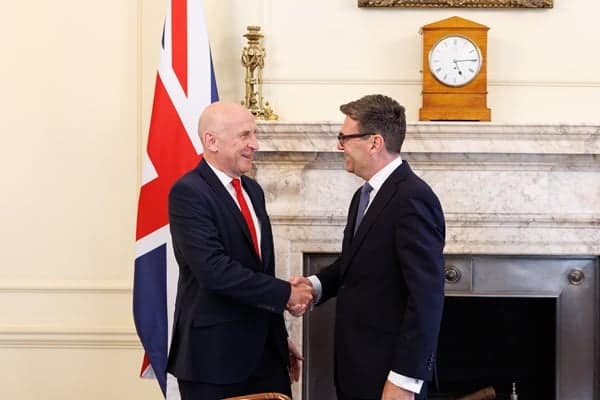
Andy Burnham has placed the cost of living at the centre of his first days in Downing Street, telling ministers that Britain needs a government focused on easing financial pressure — but his opening moves have already triggered questions over how his promises will be paid for.
Addressing his newly reshuffled Cabinet, the new Prime Minister urged ministers to search for immediate measures that could give households “breathing space” as families continue to struggle with high bills.
“What can we do just to take that little bit of pressure off people’s shoulders?” Mr Burnham told colleagues. “Just to give them that little extra sense that help is coming.”
The message marked a clear attempt to reset the tone of government after months of political turbulence, with Mr Burnham promising a new economic approach centred on affordability, public intervention and support for struggling households.
His first major announcement was an £850 million reduction in electricity costs, achieved through removing VAT from domestic electricity bills from October 1. The move is expected to save households around £45 a year.
The policy was welcomed by fuel poverty campaigners but immediately sparked a political row over funding.
Former Treasury minister Darren Jones, a close ally of outgoing Prime Minister Sir Keir Starmer, warned the government would need to explain how it planned to finance the measure, arguing that scrapping the digital ID programme could not be counted as a saving because the project had not been fully funded.
“Good news that VAT will be cut on electricity bills,” Mr Jones said. “But the government will have to set out how it will pay for its new policies.”
The criticism highlights the challenge facing Mr Burnham as he attempts to combine an ambitious spending agenda with market confidence.
The Prime Minister has repeatedly insisted that every policy will come with a clear explanation of how it is funded, as investors watch closely for signs of a shift in Britain’s fiscal direction.
Mr Burnham’s first speech outside Downing Street promised the “biggest changes in the last 40 years”, including a new political and economic model built around stronger public control of essential services.
His first Cabinet meeting followed a sweeping reshuffle that removed several senior figures from the previous administration.
Former Chancellor Rachel Reeves, deputy prime minister David Lammy, housing secretary Steve Reed and business secretary Peter Kyle all left government as Mr Burnham moved quickly to establish his own team.
John Healey was appointed Chancellor, while Louise Haigh became First Secretary of State and Chancellor of the Duchy of Lancaster. Ed Miliband moved to the Foreign Office, Shabana Mahmood remained Home Secretary and Wes Streeting took over as Defence Secretary.
Notably, Mr Burnham chose not to appoint a deputy prime minister, leaving the role previously held by Ms Rayner and Mr Lammy vacant.
The new Prime Minister now faces the difficult task of turning promises of immediate relief into policies that satisfy households, businesses and financial markets alike.
His political reset has begun — but the battle over the bill has already started.


Leave a Comment