
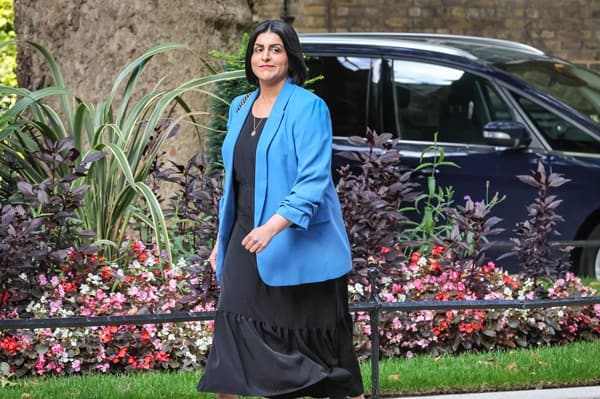
Shabana Mahmood is preparing to launch a controversial new refugee sponsorship scheme that could see more than 10,000 people resettled in Britain – with households expected to help house and support arrivals.
The Labour Government is facing fresh criticism after unveiling plans to bring thousands more refugees into Britain under a new sponsorship programme inspired by the Homes for Ukraine scheme.
Home Secretary Shabana Mahmood is expected to announce the policy next week as part of a sweeping Immigration and Asylum Bill, creating new “safe and legal” routes for refugees from some of the world’s biggest conflict zones.
Under the proposals, British families, charities and community groups would be encouraged to sponsor refugees, providing accommodation and helping them settle into life in the UK during their first year.
More than 10,000 refugees could arrive through the programme by 2030, according to reports, although ministers have yet to confirm an official target.
The move is likely to spark a political row at a time when immigration remains one of the biggest concerns among voters and the Government continues to struggle to bring down record asylum costs.
Critics are expected to question whether Britain can afford another large-scale resettlement programme while councils warn they are already under intense pressure to provide housing, school places, GP appointments and social care.
The new scheme would closely resemble the Homes for Ukraine programme launched following Russia’s invasion in 2022, under which around 200,000 Ukrainians were granted temporary visas after British households volunteered to host them.
However, unlike the Ukraine scheme, the latest programme would be permanent and open to refugees from multiple conflict and humanitarian crises around the world.
Applicants would first be referred by the United Nations refugee agency before being matched with British sponsors willing to support them financially and emotionally during their first 12 months in the country.
Sudanese and Eritrean refugees are expected to be among those prioritised because they represent some of the largest nationalities making dangerous Channel crossings.
Ministers argue the scheme will provide a legal alternative to people attempting to reach Britain illegally in small boats.
Announcing the reforms, Ms Mahmood said Britain had a proud history of offering sanctuary to people fleeing war and persecution.
“Britain has always offered sanctuary to those fleeing war and persecution.
But this system only survives if the public trusts that it is fair, controlled, and not open to abuse.
“I will open new legal routes for genuine refugees, while closing loopholes that have been too often abused.
“My goal is simple – to ensure we have an asylum system not just today, but for generations to come.”
The Home Secretary is expected to argue that community sponsorship should become the “new norm” for refugee resettlement.
The model has been heavily influenced by Canada’s sponsorship programme, which has helped more than 390,000 refugees settle there since 1979.
Supporters say refugees integrate more successfully when local communities are directly involved in helping them rebuild their lives.
Research from the University of Birmingham found sponsorship schemes can improve community attitudes towards refugee resettlement, while campaign groups argue they strengthen public support by allowing local people to play a direct role.
Leonie Ansems De Vries, vice-chairwoman of the Community Sponsorship Alliance, welcomed the announcement.
“The Government’s commitment to open applications this autumn is a vital step towards building a protection system with integration and public consent at its core,” she said.
It creates a real opportunity to put community energy back at the heart of the UK’s protection offer, building on the spirit of Homes for Ukraine, which proved how ready the British public are to open their arms to those fleeing danger.
But opponents are likely to ask whether expanding legal migration routes sends mixed signals while ministers continue to promise tougher border enforcement and insist they are determined to stop illegal Channel crossings.
The announcement comes as Labour also prepares to introduce major reforms to asylum, human rights and modern slavery laws aimed at making it harder for failed asylum seekers and foreign criminals to use legal challenges to remain in Britain.
Ministers insist the two policies are designed to work together—opening controlled legal routes for those deemed most in need while speeding up the removal of people with no legal right to stay.
Whether the public sees the package as a balanced overhaul or a significant expansion of Britain’s refugee commitments is likely to become one of the defining political arguments surrounding Labour’s new immigration strategy.


Leave a Comment