
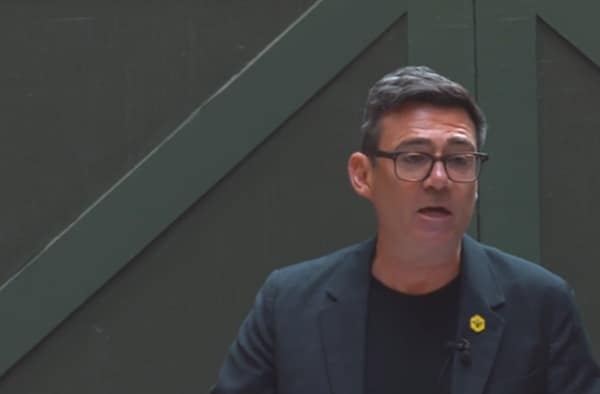
Andy Burnham has refused to say whether immigration into Britain is too high, arguing that migrant workers remain necessary to fill gaps in the economy despite 1.7m people being unemployed and mounting concern over the number of young people outside work or education.
The Prime Minister’s comments expose a central tension in Labour’s approach to migration: ministers want to demonstrate greater control over arrivals while ensuring employers can recruit the workers they need.
In an interview with ITV Tonight, due to be broadcast on Tuesday, Burnham argued that legal migration had fallen substantially but resisted setting a numerical threshold for what would constitute an acceptable level.
“Legal migration has come right down,” he said, adding: “I think when you have planned migration, it’s difficult to say is it too high or too low, because it’s got to be, if you like, following gaps in the economy. Because if you just put a number on it, then we may have a shortage in a certain area.”
The argument comes as Britain faces a complicated labour-market picture. Alongside the 1.7m unemployed, more than 600,000 young people are classified as not in employment, education or training and economically inactive.
The figures raise questions over how effectively Britain is mobilising its domestic workforce, even as businesses continue to depend on recruitment from abroad.
Burnham insisted that immigration, including illegal crossings of the Channel, was “in a much better place than it was”.
“Because boat crossings are down and net migration overall is down and down quite significantly.
“So there’s a much better control of it.”
Net migration stood at 171,000 in 2025, according to the figures cited in the briefing.
The Prime Minister, who has also called for discussion about the possibility of restoring some form of free movement with the European Union, argued that the country needed to confront the consequences of Brexit for migration.
“What I have argued is that migration and illegal immigration changed significantly with Brexit. And I think we’ve got to be honest about that.”
His comments come as Home Secretary Shabana Mahmood prepares to announce changes to the immigration system, amid indications that some proposed reforms to settlement rules have been diluted following opposition within Labour.
Mahmood had sought to extend the standard qualifying period for indefinite leave to remain — the status allowing migrants to settle permanently in Britain — from five years to ten years or longer for many applicants.
The proposals have faced criticism from Labour MPs and Housing Secretary Angela Rayner, while Burnham is also understood to have pressed for changes. Possible exemptions for care workers would soften the impact of the tougher rules on parts of the economy dependent on overseas recruitment.
The care sector presents a particularly difficult problem for ministers. Home Office minister Jo White has raised concerns about whether hundreds of thousands of people granted visas to work in social care are actually employed in the sector.
Speaking at a Labour conference panel, White described the visa arrangements as “a scandal” and highlighted the scale of recruitment following the UK’s departure from the EU.
“The biggest concern we’ve had is the number of sponsors that were issued to the social care sector.”
The previous Conservative government had expected 40,000 foreign care workers to arrive, she said, but “in fact over 600,000 arrived”.
“And there is no real sense that they are actually working in the social care sector.”
She added: “Where those workers have gone is a cause of concern. Some are continuing to work for those employers. Some have gone off [doing] we know not what.”
The allegations raise questions about oversight of the visa system, although they do not establish that all those granted visas have left care work.
For Burnham, the challenge is to show that lower migration can coexist with a functioning labour market. Labour must persuade voters that immigration is under control while convincing employers that tighter rules will not leave essential services short of staff.
The forthcoming reforms will test whether ministers can reconcile those competing demands without worsening the workforce shortages they are seeking to address.


Leave a Comment