
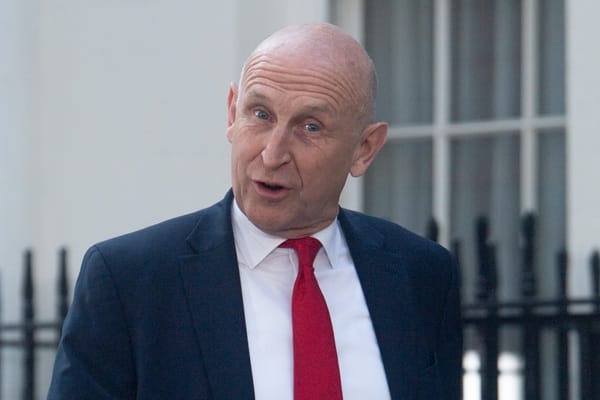
A meeting between Chancellor John Healey and consumer finance expert Martin Lewis has triggered a political row over whether the government is respecting Parliament’s right to hear major policy announcements before they are disclosed elsewhere.
The controversy erupted on Budget day after Lewis posted a photograph from 11 Downing Street, saying he was about to meet the Chancellor to discuss energy bills and expected an announcement to be made at 7am.
The post prompted questions about whether Lewis was being given advance access to measures that elected MPs would not hear about until the Chancellor addressed the Commons at 12.30pm.
Lewis wrote on X: “In the reception room at number 11 Downing Street about to in [sic] to meet the Chancellor on energy bills to hear what’s going on, expecting they’re putting out an announcement at 7am and going to tell me about that.”
The post fuelled anger among some MPs, who argued that the government risked blurring the line between consulting an influential financial commentator and giving selected individuals privileged access to policy announcements.
Rosie Duffield, the independent MP for Canterbury, Whitstable and the Villages, acknowledged Lewis’s expertise but criticised the apparent prospect of high-profile figures receiving information ahead of elected representatives.
“Fantastic. But announcements are supposed to be made in Parliament to MPs, elected to represent voting constituents,” she wrote.
“Every one of us — including Chancellors and Prime Ministers — accountable to every citizen we represent, not one or two famous people and influencers granted special access.”
The dispute touches on a longstanding principle of parliamentary government: that ministers should account to the House of Commons for major decisions before announcing them to the wider public through other channels.
The issue is particularly sensitive on Budget day, when tax, spending and household finance measures can affect millions of people and move financial markets. The order in which information is released can also confer an advantage on those who receive it first.
Some users on X called on the Speaker of the House of Commons to intervene, arguing that the government should be held to account if it had breached parliamentary convention.
One wrote that the Speaker needed to take action, accusing the government of refusing to listen to him. Another questioned whether the Commons should have been informed first, while expressing scepticism that any consequences would follow.
The underlying concern is supported by guidance on ministerial announcements. An inquiry into ministerial statements and the Ministerial Code in 2024-25 concluded that the most important announcements should be made to Parliament before being disclosed to the media, rather than simply being repeated in the Commons later the same day.
“In the context of the Code as currently drafted, making the most important statements in the first instance to Parliament means doing so before they are made to the media and not at the first available opportunity thereafter,” the inquiry stated.
It added that, apart from exceptional circumstances, making an announcement of major importance to the media first should be considered a breach of the general principle and disrespectful to the House, even if the announcement was subsequently repeated in Parliament.
However, the circumstances of Lewis’s meeting do not, on their own, establish that a breach occurred. The timing and content of any briefing, whether the information was embargoed, and whether the government had already made a public announcement would all be relevant to determining whether parliamentary conventions had been infringed.
There is also a distinction between seeking expert input on a policy and disclosing a final decision in advance. Consumer finance specialists can help ministers explain complex changes to the public, particularly where household energy costs and bills are concerned. But such engagement can become politically contentious if it appears to give selected individuals access to information before MPs have had the opportunity to scrutinise it.
For the government, the row risks distracting from the substance of the Budget and the measures intended to address household costs. For Parliament, it raises a more fundamental question about accountability: whether ministers continue to regard the Commons as the first forum for announcing major decisions, or whether political communication increasingly takes precedence over parliamentary convention.
The issue is not simply who gets to hear a Budget announcement first. It is whether the institution elected to scrutinise the government is being afforded the priority that its constitutional role demands.


Leave a Comment