
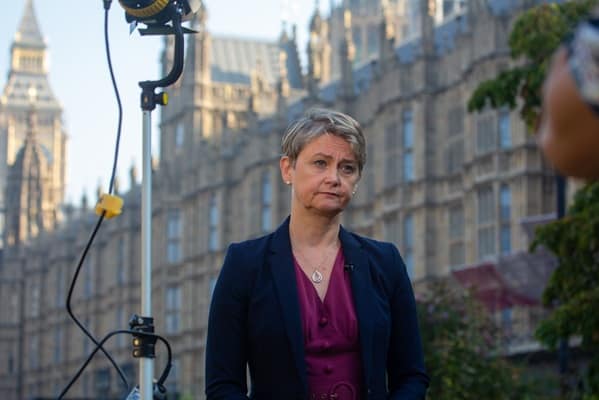
Andy Burnham has rejected Yvette Cooper’s request for hundreds of millions of pounds in additional NHS funding, exposing growing tensions within the government over public spending as ministers prepare for the Budget and hospitals face mounting pressure ahead of winter.
The Health Secretary had appealed to the Treasury for additional resources to fund a pay settlement for nurses and release money for frontline services. But the Prime Minister and Chancellor John Healey jointly rejected the request, insisting that the cost must be absorbed within existing departmental budgets, according to The Times.
The decision leaves the Department of Health and Social Care facing a difficult calculation: accommodate higher employment costs, protect frontline services and deliver Labour’s pledge to reduce waiting times, all without further substantial funding.
Health unions representing nurses, porters and midwives have warned that staff are being treated as “second-class” employees, raising the prospect of renewed industrial action. The dispute threatens to deepen tensions between ministers and a workforce on which the government’s NHS recovery strategy depends.
The department’s financial position has also been complicated by higher-than-expected inflation, which has eroded the value of budget increases agreed with the Treasury last year. Officials have additionally claimed that the government’s immigration crackdown, led by Home Secretary Shabana Mahmood, has reduced revenue from the NHS surcharge paid by foreign nationals living in Britain.
Cooper reportedly appealed directly to Downing Street after her initial request was refused by the Treasury. The joint response from the Prime Minister and Chancellor nevertheless made clear that there would be no additional funding for the pay settlement because of pressure on the public finances.
The only extra support expected in the Budget is understood to be a temporary, one-off payment to help the health service manage winter demand.
A Whitehall source said meeting the Health Secretary’s request would require existing health spending allocations to be reopened, increasing pressure on hospitals as the colder months approach.
Another source accused the department of failing to deliver the efficiency savings promised in return for a £29bn funding increase at the previous spending review.
“Other departments have had to scrimp and save and just get on with it. But the NHS always thinks it is entitled to more and more money,” the source told The Times.
The dispute comes as official figures underline the scale of the challenge facing the government’s flagship NHS recovery programme.
An estimated 7.37mn treatments were awaiting completion in England at the end of August, affecting 6.24mn patients. Both figures increased from July, when 7.33mn treatments were outstanding for 6.21mn patients. The total number of treatments waiting was the highest since October 2025.
The number of people waiting more than a year to begin routine treatment also rose, reaching 113,339 at the end of August, compared with 111,379 a month earlier.
Labour has pledged that 92 per cent of patients in England will begin treatment within 18 weeks by the end of the current Parliament in 2029. At present, around 65 per cent meet that standard.
There are signs of progress, but they have yet to translate into a sustained reduction in the backlog. NHS England said 4,738,824 planned treatments, procedures and appointments took place across June, July and August — more than during any previous summer.
The government cited the figures as evidence of increased capacity, while acknowledging that demand continues to stretch the service.
A government spokesman said: “This government is backing the NHS with record investment to get it back on its feet, cut waiting lists and ensure hardworking NHS staff are fairly rewarded.
“Since July 2024, waiting lists are down by over 251,000, and behind those numbers are hundreds of thousands of patients getting treated faster and no longer waiting in pain or uncertainty.
“This year we accepted the independent NHS pay Review Body’s recommendation, delivering a 3.3 per cent pay rise for Agenda for Change staff from April, and we continue to work constructively with unions on improvements to the pay structure in addition to the pay award.”
The approaching winter is likely to test those claims. Professor Frankie Swords, NHS England’s national medical director, said staff had delivered record levels of elective care while supporting the busiest September on record for accident and emergency attendances and ambulance incidents.
But she warned that signs of seasonal pressure were already emerging, with more patients arriving at A&E with flu and other respiratory viruses than would normally be expected at this time of year.
“NHS staff have done fantastic work to deliver record levels of elective care this summer and now supporting the busiest September on record for A&E attendances and ambulance incidents. But now the focus is on the looming winter months ahead,” she said.
“Staff are already seeing the ominous early signs of pressure, with more patients coming to A&E with flu and other respiratory viruses than usual for this time of year, and unfortunately many people are still waiting longer than we would like them to.”
Swords urged eligible members of the public to take up offers of flu, RSV and Covid vaccinations, arguing that prevention would help protect vulnerable people and ease pressure on hospitals.
Cooper also praised NHS staff for maintaining activity despite rising demand, saying the service was dealing with summer pressures alongside the usual winter preparations.
“Step by step, our NHS has been increasing its delivery and performance, making a real difference to patients’ lives even as demand is growing,” she said.
“But with winter now approaching, pressure on our NHS is set to increase again.”
The confrontation over pay exposes the limits of the government’s spending settlement. Ministers must reward staff, improve productivity and reduce waiting times while resisting demands for further money. Yet the NHS faces rising costs, persistent backlogs and the prospect of another difficult winter.
With the Budget approaching, the immediate question is whether existing resources can support both the government’s pay commitments and its promise of faster treatment. The refusal to provide additional funding leaves that tension unresolved — and places the burden of reconciling competing priorities on the health service itself.


Leave a Comment