
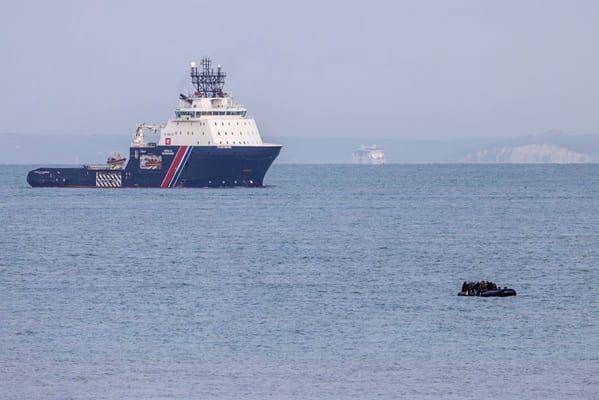
People-smuggling gangs are shifting their small-boat operations further west along the French coast, opening a new pressure point for Britain’s already strained Channel migration system.
A dinghy launched from western Normandy on Sunday morning was heading towards the Hampshire coast after setting off from a beach near Cherbourg at about 6am. It was among several boats attempting the crossing, with hundreds of migrants seeking to reach UK waters.
The vessel was travelling north under the escort of a French border patrol ship and two lifeboats. Once it reaches British waters, UK authorities are expected to intercept those on board, although it was unclear where they would subsequently be accommodated or processed.
The departure point reflects a shift in tactics by criminal gangs operating the Channel route. Boats are increasingly being launched from beaches around 150 miles further west than the traditional departure points around Dunkirk and Calais, GB News reported.
Read more related news:
Gosport on a knife edge: Hampshire police under fire as migrants ‘get more protection than the King’
Brutal ‘insult to hard-working taxpayers’ as migrant households claim record £11.9bn in benefits
Russian national ‘definitely’ among migrants who breached UK undetected
Labour’s migration headache deepens as Iranian small-boat arrivals face terror charges
The change creates an additional challenge for British and French authorities, potentially expanding the geographical area that must be monitored while increasing the number of coastal communities exposed to arrivals.
More than 200 migrants had already reached UK waters on Sunday and were taken to the Border Force processing centre at Dover. Several other boats remained in French waters and were heading towards Britain.
Almost 500 migrants have crossed the Channel since Friday, while around 19,700 have made the journey so far this year.
The figure remains about 40 per cent below the number recorded during 2025, when more than 41,000 people crossed in what was an exceptionally busy year for small-boat arrivals.
But the lower annual total has done little to ease political and public tensions along the south coast.
Hampshire has witnessed a series of protests following the arrival of a large dinghy south of the Isle of Wight in September. Anger escalated in Eastney, near Portsmouth, when migrants were taken ashore and transported by bus, prompting attempts by protesters to block the vehicles.
A subsequent attempt to land more migrants in Hampshire was abandoned amid further demonstrations, with Border Security Command vessels instead transporting those intercepted to Dover harbour.
The confrontations have underscored the growing local sensitivity surrounding the government’s handling of Channel arrivals.
For ministers, the latest movements present a difficult paradox. Crossings remain substantially below last year’s record levels, yet the underlying trafficking network continues to adapt, finding new launch locations and testing the capacity of French and British authorities to respond.
The shift towards Normandy also demonstrates the limits of measuring the border crisis purely through annual arrival totals.
Even with crossings down sharply on 2025, hundreds of people can still reach British waters within days, while criminal gangs continue to alter their routes faster than governments can close them.
The result is a migration system in which the headline numbers may be falling, but the operational challenge facing Britain’s border authorities is becoming more geographically dispersed — and increasingly difficult to contain.


Leave a Comment