
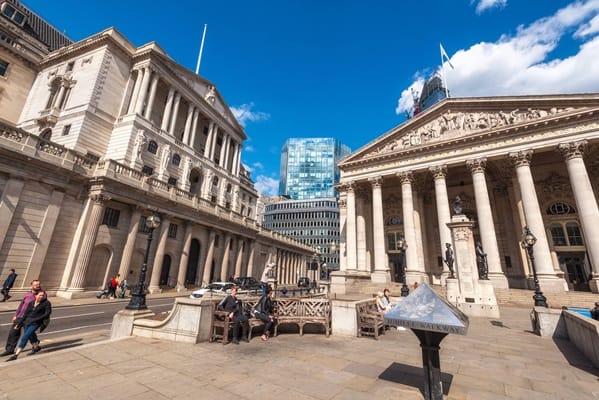
Britain’s borrowers have been dealt another blow after the Bank of England held interest rates at 3.75 per cent for the fifth consecutive meeting.
The Monetary Policy Committee (MPC) voted 6-3 to keep the cost of borrowing unchanged, with Governor Andrew Bailey backing the decision.
However, the split vote highlighted divisions over the inflation outlook, with three policymakers—including Huw Pill, Megan Greene and Catherine Mann—calling for rates to rise to 4 per cent.
The decision offers some relief for savers benefiting from higher returns, but leaves mortgage holders, households with loans and businesses facing continued pressure from elevated borrowing costs.
The Bank has kept rates high to prevent inflation from becoming entrenched after the post-pandemic surge in prices, with energy volatility and global conflicts adding further uncertainty.
Markets had been hoping for clearer signals on when rate cuts could begin, but the divided vote suggests policymakers remain cautious.
For millions of borrowers, the message is clear: cheaper credit is still some way off.
Isaac Stell, Investment Manager at Wealth Club, said: “Against a turbulent economic backdrop, the Bank of England has kept interest rates unchanged for a fifth consecutive meeting, opting for caution as policymakers assess the impact of geopolitical tensions and their implications for inflation.
“The decision will come as little surprise, with financial markets having largely priced in no change ahead of today’s announcement. Inflation eased in June, helped by lower energy prices, but the Bank continues to tread carefully as global events complicate the outlook.
“The increasingly interconnected nature of the global economy means shocks can quickly ripple through supply chains, commodity markets and ultimately consumer prices. Recent tensions in the Middle East are a case in point, while rapid policy shifts from the White House have added another layer of uncertainty for central bankers worldwide.
“The BoE has judged that lingering inflationary pressures, set against an increasingly sluggish economic backdrop, warrant keeping rates on hold for now. Markets are currently pricing in just one further 0.25% increase this year. However, with one crisis seemingly giving way to the next, forecasting the path of interest rates remains a hazardous exercise. If recent years have taught us anything, it is that in monetary policy, the only certainty is uncertainty.”
Louise Halliwell, group savings director at Kent Reliance, said: “Holding interest rates may offer reassurance that borrowing costs are no longer rising, but our data suggests many households remain firmly in ‘protection mode.
“Consumers are continuing to cut back on saving or draw on existing savings to manage higher bills, highlighting that financial confidence doesn’t necessarily translate into greater financial resilience.”


Leave a Comment