
Ukraine’s long-range strike campaign is inflicting far greater damage on Russia’s military production and economy than is widely understood, according to analysis highlighted by The Economist, suggesting Moscow is facing a sustained erosion of its war-making capacity far from the front lines.
The assessment points to a sharp escalation in Ukraine’s ability to target critical infrastructure deep inside Russian territory, with attacks increasingly focused not only on symbolic military sites but on the industrial systems that underpin the Kremlin’s war effort.
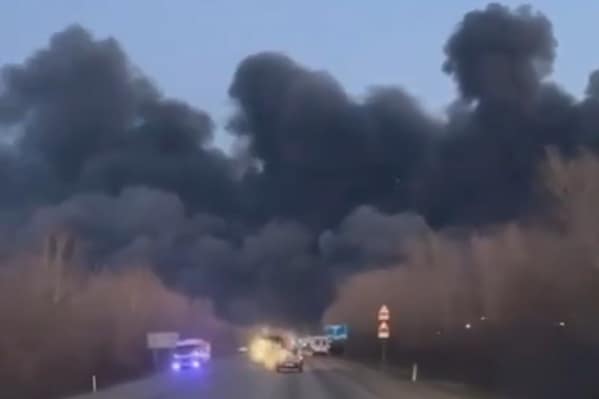
Dramatic imagery from strikes inside Russia, the analysis notes, serves an important psychological function, bringing the war closer to ordinary Russians living far from the battlefield and undermining the perception of invulnerability that Moscow has long sought to maintain.
But the more significant impact, it argues, is economic.
According to data analysis cited by The Economist, Ukraine has carried out at least 1,289 long-range strikes on targets more than 100 kilometres from its border since the start of the war. The intensity of these attacks has risen sharply, with 658 recorded in 2025 alone compared with 335 between 2022 and 2024.
The shift suggests not only an expansion in capability but also a change in operational doctrine, with Kyiv increasingly prioritising sustained pressure on Russia’s industrial base rather than isolated high-profile attacks.
The analysis also highlights the growing role of domestically produced Ukrainian systems in the campaign. Senior Ukrainian defence figures have indicated that long-range drones manufactured by companies such as Fire Point have accounted for a significant proportion of strikes and successful target hits in recent phases of the war.
This reflects a broader transformation in Ukraine’s defence industry, which has moved rapidly from emergency wartime improvisation to large-scale production of strike systems capable of reaching deep into Russian territory.
The targets themselves underline the strategic intent of the campaign.
Oil refineries, fuel depots, transport infrastructure, military production facilities and logistics hubs have all been repeatedly struck, with some sites reportedly hit multiple times — a tactic designed not only to cause immediate damage but to complicate repair efforts and prolong disruption.
In locations such as Tuapse, repeated strikes during repair operations have demonstrated a deliberate effort to amplify the economic cost of recovery, forcing Russia into a cycle of repair and re-strike that strains both resources and industrial capacity.
The consequences for Russia’s energy sector are becoming increasingly visible.
The Economist reports that Russian refinery output this spring was around 15 per cent lower than the previous year, despite favourable global price conditions — an indication that physical disruption, rather than market demand, is now constraining production.
More broadly, the analysis suggests that Russia’s fossil fuel revenues have underperformed expectations since mid-2025, with a widening gap emerging between global benchmark prices and actual export earnings.
That divergence points to structural disruption in supply chains, rather than short-term volatility.
There are also signs that domestic shortages are beginning to influence export policy itself, with reports of reduced shipments as fuel is redirected to meet internal demand following damage to infrastructure.
Taken together, the findings suggest that Ukraine’s strategy is evolving into a sustained economic campaign aimed at eroding Russia’s capacity to finance and sustain the war.
Rather than relying solely on battlefield attrition, Kyiv appears increasingly focused on what military analysts describe as “strategic depth denial” — making it progressively harder for Russia to operate safely within its own territory.
The approach is also cumulative. Each strike may cause limited immediate disruption, but repeated attacks across multiple sectors create compounding pressure on logistics, repair capacity and industrial output.
While the Kremlin continues to project resilience, the underlying trends point to growing strain within key sectors of the Russian economy most closely tied to the war effort.
As the conflict enters a prolonged phase, Ukraine’s expanding long-range strike capability is increasingly shaping not just the battlefield, but the economic foundations underpinning Russia’s military campaign.
And according to analysts, that shift may ultimately prove as significant as any territorial change on the front lines.


Leave a Comment