
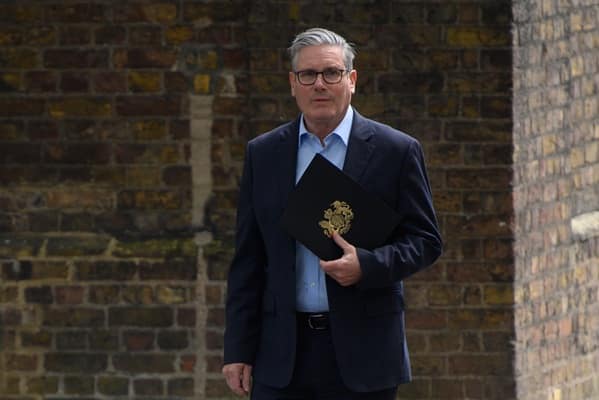
Keir Starmer is facing the gravest threat yet to his authority after the resignation of John Healey triggered claims that his position as Prime Minister is now “untenable”.
The dramatic departure of the Defence Secretary has detonated a political row over Britain’s military spending priorities, exposing deep divisions within government and prompting accusations that Downing Street is failing to take national security seriously at a time of growing international instability.
Mr Healey quit after refusing to back what he regarded as an inadequate settlement for the long-delayed Defence Investment Plan, warning that ministers were failing to provide the Armed Forces with the resources required to meet rising threats.
In a devastating resignation letter, he accused Sir Keir of being “unable” and the Treasury of being “unwilling” to commit the funding necessary to defend the country.
The intervention immediately sparked calls from critics for the Prime Minister to consider his own position.
Ben Obese-Jecty, the Conservative MP and former Army officer, described Mr Healey’s departure as a “hugely principled stance” and said it raised fundamental questions about the Government’s ability to govern.
“The chaos around the Defence Investment Plan and no agreement on how we defend the nation has caused the Secretary of State to resign,” he said.
“Keir Starmer’s position as Prime Minister must now be untenable.”
The resignation represents a major humiliation for Downing Street after months of delays to the Defence Investment Plan, which ministers had repeatedly promised would set out how Britain intends to rebuild its military capabilities amid growing geopolitical tensions.
Instead, the plan has become a symbol of wider disagreements inside government over spending, priorities and Britain’s strategic direction.
Kemi Badenoch seized on the crisis, declaring that Sir Keir’s premiership was “falling apart”.
The Conservative leader argued that the departure of a second Cabinet minister in a matter of weeks pointed to a government losing control.
“His Health Secretary resigned two weeks ago. His Defence Secretary has resigned at a critical time when we are facing global threats,” she said.
“We need to start funding defence. We need to get to 3 per cent of GDP by the end of this Parliament.
“Keir Starmer has no plan whatsoever. I don’t see how he can stay in this job. He can’t run the country.”
Mrs Badenoch accused the Prime Minister of prioritising the demands of Labour backbenchers over Britain’s security requirements, claiming he was trapped between competing factions inside his own party.
The criticism was echoed by Unite, traditionally one of Labour’s most influential union allies, which issued a remarkably blunt assessment of the Government’s handling of defence spending.
Sharon Graham, Unite’s general secretary, said the resignation had exposed “utter chaos at the heart of government”.
“What is going on in regard to yet another delay on the Defence Investment Plan is fast becoming a national disgrace,” she said.
“John Healey’s resignation letter has laid bare the utter chaos at the heart of government on this issue.
“Defending the UK and investing in our defence industry simply can’t be done on the cheap.”
She warned that delays and uncertainty threatened defence jobs, skills and industrial capacity, arguing that Britain’s military infrastructure required urgent investment.
The intervention will alarm Downing Street because it comes not from political opponents but from a union movement that has traditionally been among Labour’s strongest supporters.
The growing backlash leaves Sir Keir under intense pressure as he attempts to finalise a defence strategy that has already suffered repeated delays and mounting criticism.
With NATO allies demanding increased military spending, Russia continuing its war in Ukraine and tensions rising across multiple theatres of conflict, questions are now being asked not only about Britain’s defence capabilities but also about the stability of the Government itself.
For a Prime Minister elected on promises of competence and discipline, the sight of a Defence Secretary resigning in open protest over national security funding risks becoming a defining political moment.
What was supposed to be a showcase of Labour’s defence credentials has instead become a test of Sir Keir Starmer’s authority — and one from which he emerges badly weakened.


Leave a Comment