
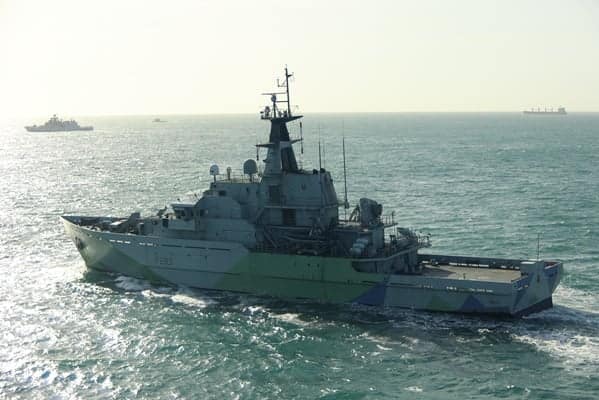
A Russian frigate has been continuously tracked by the Royal Navy for an entire month after operating close to British waters, in a sustained show of maritime surveillance amid heightened tensions with Moscow.
The Russian frigate Admiral Grigorovich was monitored throughout April as it sailed to the west of the UK and into the North Sea, at times passing uncomfortably close to critical infrastructure, including the Galloper wind farm off the Suffolk coast.
Royal Navy patrol ships HMS Tyne, HMS Mersey and HMS Severn were deployed alongside tanker RFA Tideforce and Wildcat helicopters from 815 Naval Air Squadron to track the vessel’s movements.
A Royal Navy spokesman said there had not been a single day in April when the Russian ship — or vessels associated with its mission — were not under close observation by British air or sea assets.
Officials said the frigate spent much of the month escorting Russian-flagged vessels transiting between the Atlantic, Mediterranean and Baltic, including one submarine and several merchant and support ships. The activity is understood to form part of Moscow’s efforts to safeguard so-called “shadow fleet” shipping operations used to circumvent Western sanctions.
The prolonged deployment highlights the increasingly assertive posture of Russian naval forces operating near UK waters, as well as the growing demands placed on Britain’s maritime defences.
The development comes as Sir Keir Starmer faces mounting pressure from allies to expand Britain’s military commitments in eastern Europe, the Arctic and the Middle East — despite longstanding concerns over the size and capability of the Royal Navy, now at its smallest scale since the 17th century.
Ministers argue that sustained monitoring operations are yielding results. Defence Minister Luke Pollard said Russian reliance on naval escorts for commercial shipping demonstrated increasing vulnerability in the face of Western pressure.
He said the UK’s decision to grant the Royal Navy powers to board and interdict sanctioned vessels in British waters had forced Russian shipping to alter routes and operate under greater protection.
“Having to have a Russian frigate escort one of their vessels shows how vulnerable they now are,” he said. “We reserve the right, at a time of our choosing, to interdict a Russian vessel ourselves.”
Mr Pollard added that around 500 British armed forces personnel had been deployed in recent weeks to track covert Russian submarine activity, with operations aimed at delaying and disrupting Moscow’s movements.
The presence of the Admiral Grigorovich near sensitive infrastructure is likely to reinforce concerns about the security of offshore assets, particularly energy installations that form a critical part of the UK’s national infrastructure.
While such encounters fall short of direct confrontation, defence analysts say they represent a persistent “grey zone” challenge — testing response times, probing defences and maintaining pressure without crossing into open conflict.
For the Royal Navy, the month-long shadowing operation underscores both its enduring operational reach and the strain of maintaining constant vigilance in increasingly contested waters.


Leave a Comment