
The United States has intercepted an Iranian merchant vessel in the Arabian Sea, marking the latest escalation in a widening maritime confrontation linked to sanctions enforcement and the broader conflict over energy flows through the Gulf.
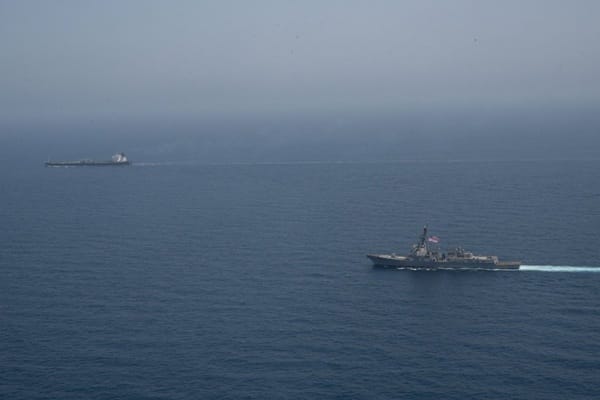
U.S. central Command (CENTCOM) said the vessel, the M/V Sevan, was intercepted on April 25 with assistance from a U.S. Navy helicopter operating alongside the guided-missile destroyer USS Pinckney (DDG-91).
According to CENTCOM, the ship complied with orders to turn back towards Iran under escort.
The Sevan, a Panama-flagged merchant vessel, was sanctioned by the U.S. Treasury on April 24, alongside 18 other ships accused of transporting Iranian oil and gas products to foreign buyers. Washington said the so-called “shadow fleet” is a key channel linking Iranian energy producers to Asian markets.
The U.S. Treasury alleged the vessel transported around 750,000 barrels of Iranian propane and butane to Bangladesh between August and November 2025. It is reportedly owned by Anka Energy and Logistics Company, a Marshall Islands-based firm.
The interception underscores an increasingly assertive U.S. enforcement posture at sea, with Treasury officials stating that 37 vessels have now been redirected as part of ongoing sanctions operations targeting Iranian energy exports.
Washington has described the campaign as part of broader efforts to restrict Iran’s ability to finance its energy trade network, which it says relies heavily on clandestine shipping routes and reflagged vessels operating in international waters.
The latest move comes against the backdrop of heightened tensions in the region, where maritime traffic through the Strait of Hormuz has reportedly fallen sharply amid ongoing conflict. The strait is one of the world’s most critical energy chokepoints, carrying roughly a fifth of global oil and liquefied natural gas shipments.
Disruption in the waterway has fuelled volatility in global energy markets, with Brent crude briefly surging to nearly $120 a barrel in March, levels not seen since the early stages of the war in Ukraine.
US officials have argued that sustained enforcement of sanctions is necessary to curb Iranian energy exports, while Tehran has previously accused Western powers of using maritime pressure tactics to constrain its economy.
The interception of the Sevan is likely to further heighten scrutiny of naval activity in the region, where military and commercial shipping increasingly intersect amid rising geopolitical tensions.


Leave a Comment