
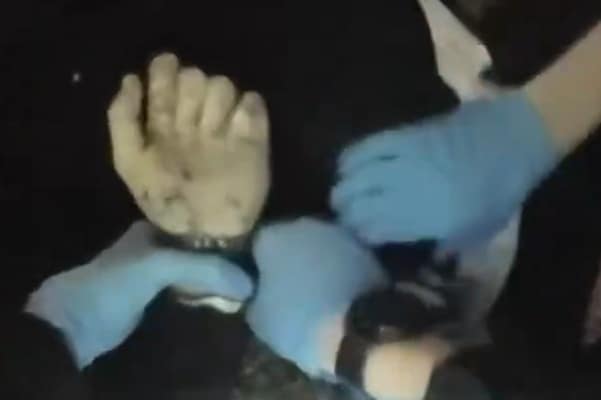
An inquest into the death of Henry Nowak will examine whether the actions of police officers contributed to the 18-year-old’s death, a coroner has confirmed, in a decision that is likely to intensify scrutiny of the force’s handling of one of the most controversial criminal cases in recent years.
The hearing, which will take place before a jury at Winchester Coroner’s Court in September 2027, is expected to examine not only the circumstances of Mr Nowak’s death but also the actions of officers in the critical minutes before he collapsed.
Jason Pegg, the coroner for Hampshire, Portsmouth and Southampton, said the case engaged Article 2 of the European Convention on Human Rights, the provision protecting the right to life, because Mr Nowak died while effectively in police custody.
Read more related news:
‘Move along now’ as police watchdog urges public not to believe their own eyes
Farage warns the police are ‘obsessed with DEI’ and are ‘not treating everyone equally’
Police legitimacy on the line after Nowak case
GB News host blasts police ‘don’t care’ and ‘must be prosecuted’ over Henry Nowak case
Monty Python star savages Starmer of ‘incompetence’ amid ‘two-tier policing’
That determination significantly broadens the scope of the inquest.
“The scope of any inquest where Article 2 is engaged is not simply how someone came by their death, but also in what broader circumstances,” Mr Pegg told the court.
In a potentially significant development, the coroner indicated that previous investigations had not fully satisfied the requirements imposed by Article 2.
“I am not satisfied that the investigations that have taken place to date in relation to the death of Henry Nowak have fully discharged the investigative Article 2 obligation,” he said.
The remarks suggest that the inquest could become a central forum for examining decisions taken by police officers at the scene and whether alternative actions may have altered the outcome.
Mr Pegg said one of the key issues likely to be explored would be whether any act or omission by police officers, or any delay in medical treatment, caused or contributed to Mr Nowak’s death.
The issue in this case is likely to be whether any act or omission by a police officer or any delay in the treatment Henry Nowak received caused or contributed to death,” he said.
The coroner added that a jury hearing would allow public scrutiny of the events and ensure that Mr Nowak’s family could participate fully in proceedings.
The case has generated intense public and political controversy since details emerged of the events leading to the teenager’s death.
On December 3 last year, Mr Nowak was fatally stabbed during an altercation involving Vickrum Digwa, who was subsequently convicted of murder and jailed for life with a minimum term of 21 years.
Body-worn camera footage later released by police showed officers arriving at the scene after Digwa and members of his family alleged that they had been victims of a racial attack.
Mr Nowak was handcuffed while lying face down on a gravel driveway despite repeatedly telling officers that he had been stabbed.
The footage showed him saying “I have been stabbed” and “I can’t breathe” multiple times.
At one stage, an officer responded: “You’ve been stabbed? I don’t think you have, mate.”
Three minutes after being arrested, Mr Nowak lost consciousness. He was pronounced dead shortly after midnight on December 4.
The release of the footage sparked widespread outrage and prompted questions over whether officers properly assessed the situation and responded appropriately to Mr Nowak’s medical condition.
The Independent Office for Police Conduct continues to investigate the actions of officers involved.
The forthcoming inquest is expected to become a major test of accountability, with jurors tasked with examining whether the decisions made in those final minutes played any role in the death of a teenager whose case has already shaken public confidence in policing and provoked a fierce national debate over justice, responsibility and trust in the authorities.
For Henry Nowak’s family, the coroner’s ruling offers the prospect of a full public examination of events. For the police, it raises the prospect of uncomfortable questions that have yet to be answered.


Leave a Comment