
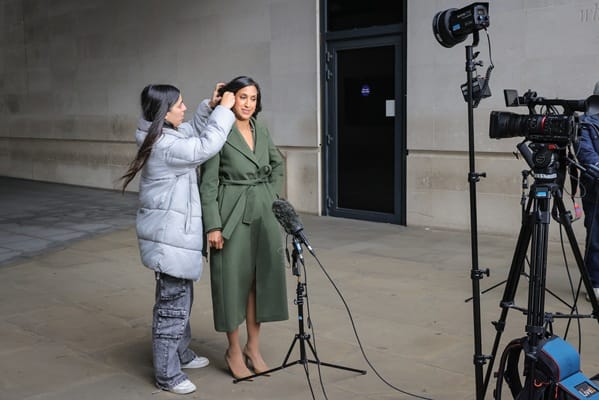
A senior Tory Conservative frontbencher has claimed there is a “huge problem” with two-tier justice in Britain, escalating a politically charged debate over policing, public services and institutional bias following renewed scrutiny of high-profile criminal cases, she told Sky News.
Claire Coutinho, the shadow energy secretary, said there was an “ideology within public services” that needed to be “rooted out”, arguing that it was distorting decision-making across policing and other frontline institutions.
Her comments came during an interview with Sky News in which she was questioned about the response to the murder of Henry Nowak and wider concerns raised about how police handled events in the moments before his death.
Read more related news:
Two-tier policing fears deepen after force’s own officers speak out
Police legitimacy on the line after Nowak case
‘Move along now’ as police watchdog urges public not to believe their own eyes
Farage warns the police are ‘obsessed with DEI’ and are ‘not treating everyone equally’
The intervention places her at the centre of an increasingly fraught political argument over so-called “two-tier policing”, a term used by critics to suggest differential treatment within the justice system depending on ethnicity — a claim strongly rejected by the Government and senior policing leaders.
Earlier in the day, Treasury minister Lucy Rigby dismissed the concept outright, describing “two-tier policing” as a “slur on the thousands of police officers” who serve daily across the country.
However, Coutinho defended her position when pressed, saying she believed there was a “huge problem” embedded not only in policing but across public services more broadly.
She pointed in particular to what she described as a “race action plan”, arguing that guidance encouraging differential approaches to ethnic minority groups amounted to inappropriate institutional practice. She said such frameworks risked shaping operational decisions in ways that were “clearly wrong”.
Coutinho went further, claiming there was an “ideology that has taken hold” across parts of the public sector which prioritises avoiding accusations of racism over effective service delivery. She argued that this had, in some cases, contributed to failures to protect the public, citing serious criminal cases in support.
“There are cases where those meant to protect us have not been able to do their job because they have been frightened of being called racist,” she said, adding that this had become a systemic issue affecting judgment across agencies.
Pressed for evidence, she pointed to a number of previous criminal investigations and argued that public bodies were increasingly focused on measuring disparities in outcomes through the lens of racism, which she said risked distorting operational priorities.
“The dominant ideology, the real problematic ideology we have, is that the root cause of all of these differences is racism,” she said. “That is not the case.”
The remarks are likely to intensify political tension over policing and equality policy, with critics accusing Conservative figures of amplifying contested narratives about the justice system, while supporters argue they are raising legitimate concerns about institutional culture and operational decision-making.
The row now risks broadening beyond policing into a wider ideological dispute over how public services interpret equality guidance — and whether that interpretation is helping or hindering effective enforcement of the law.


Leave a Comment