
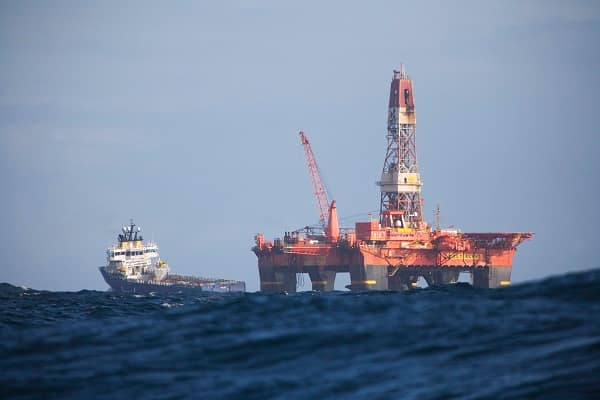
North Sea oil prices have surged to a record high as traders race to secure supplies, amid mounting fears that the Strait of Hormuz will remain effectively closed despite a fragile ceasefire.
The Forties Blend, the key benchmark for UK-produced crude, climbed to nearly $147 a barrel late on Thursday — overtaking its previous peak during the 2008 financial crisis — as buyers scrambled for physical cargoes.
The dramatic rise marks a sharp escalation from around $60 at the start of the year, underlining the scale of disruption caused by weeks of conflict in the Middle East and the growing anxiety gripping global energy markets.
The rally comes after Donald Trump accused Iran of failing to honour the terms of a ceasefire agreement that was intended to reopen the Strait of Hormuz — a vital artery for global oil shipments. His comments have fuelled fresh uncertainty over whether normal flows can resume any time soon.
While North Sea crude has surged, global benchmark Brent crude oil has been more restrained, rising 1.9% to around $97.79 a barrel on Friday morning. Prices had briefly fallen to near $90 earlier in the week following the announcement of a two-week truce between Washington and Tehran.
However, the ceasefire was conditional on the reopening of the strait — a development that has yet to materialise. Traders warn that without a full restoration of shipping through the narrow Gulf passage, supply shortages will persist, particularly in Europe, which relies heavily on seaborne crude.
The sharp divergence between North Sea and global benchmark prices reflects a scramble for accessible oil supplies, as refiners and traders seek alternatives to disrupted Middle Eastern flows. Analysts say this has pushed regional grades such as Forties to extreme premiums.
The surge is likely to have immediate consequences for UK motorists and businesses, with higher crude prices feeding through into petrol, diesel, and energy costs in the weeks ahead.
Industry experts caution that volatility will remain elevated, with markets highly sensitive to any developments in the Gulf. If the Strait of Hormuz remains constrained, the current spike could mark the beginning of a prolonged period of elevated oil prices — reinforcing warnings that the region remains a geopolitical “powder keg.”
The US president posted on his Truth Social platform: “There are reports that Iran is charging fees to tankers going through the Hormuz Strait – They better not be and, if they are, they better stop now! President DONALD J. TRUMP.”
He added in another post: “Iran is doing a very poor job, dishonorable some would say, of allowing Oil to go through the Strait of Hormuz. That is not the agreement we have!”
Richard Hunter, head of markets at Interactive Investor, said: “Despite the oil price ticking marginally higher, the oil majors slipped and, given their size, this weighed on the FTSE 100 at the open.
“The index was largely flat, with the downward pressure offset by some selective buying among the housebuilders, who have enjoyed a positive week following the likelihood of monetary tightening increasingly off the table.
“Retailers also found some friends after what has been a challenging few months, although the gains were far from spectacular.”


Leave a Comment