
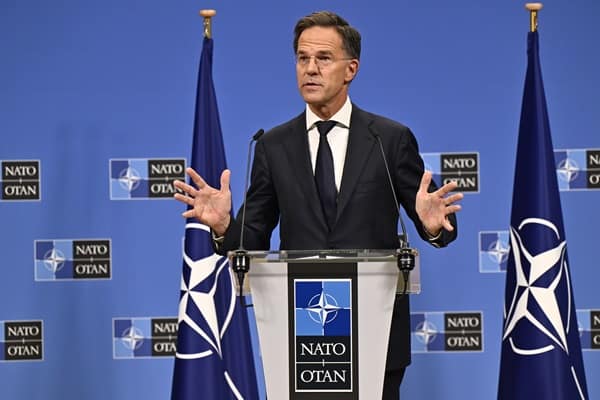
Mark Rutte has warned Vladimir Putin that any Russian use of nuclear weapons against Ukraine would provoke a “devastating” response from NATO, as Moscow launched major nuclear drills alongside Belarus.
The unusually blunt warning came as Russia began three days of exercises involving strategic missile forces, nuclear-capable submarines, long-range bombers and ballistic missile units in what the Kremlin said was preparation for operations against a “probable adversary”.
Speaking before a meeting of NATO foreign ministers on Tuesday, Mr Rutte said the alliance was watching the exercises closely amid mounting fears that the Kremlin is escalating nuclear threats against the West.
Asked what NATO’s response would be if Russia carried out a nuclear strike on Ukraine, he replied: “They know if that happens, the reaction is devastating.”
Read more related news:
Russia and NATO edge closer to direct risk as nuclear missile drills intensify
Badenoch blasts Starmer for buying Russian oil which will fund Putin’s war
Labour is fuelling Putin’s war as another U-turn opens door to Russian diesel
Russia and NATO edge closer to direct risk as nuclear missile drills intensify
The exercises, which run until May 21, involve more than 64,000 troops, nearly 8,000 pieces of military equipment, 140 aircraft, 73 warships and 13 submarines, according to the Russian defence ministry.
Among the forces participating are Russia’s Strategic Missile Forces, the Northern and Pacific Fleets, and long-range aviation units responsible for the country’s nuclear bomber fleet.
Moscow said the drills would rehearse the preparation and launch of ballistic and cruise missiles as well as command coordination for nuclear “deterrence” missions.
The manoeuvres are also taking place in neighbouring Belarus, where Russia has stationed tactical nuclear weapons since 2023 in one of the most significant shifts in Europe’s nuclear posture since the Cold War.
Kyiv has repeatedly warned that the Kremlin is attempting to draw Belarus deeper into the war while expanding military infrastructure that could threaten both Ukraine and NATO’s eastern members.
Ukraine’s foreign ministry condemned the exercises as an “unprecedented challenge” to global security and accused Moscow of using nuclear intimidation to destabilise Europe.
Sviatlana Tsikhanouskaya, the exiled Belarusian opposition leader, said Alexander Lukashenko had transformed the country into “a platform for Russia’s threats”.
Western officials have grown increasingly concerned over the Kremlin’s nuclear rhetoric since the start of the invasion of Ukraine, particularly as Russia’s conventional military advances have slowed and pressure from NATO-backed Ukrainian operations has intensified.
Although NATO has consistently sought to avoid direct military confrontation with Russia, alliance officials have also tried to make clear that any nuclear escalation would fundamentally alter the conflict and risk triggering a broader European crisis.


Leave a Comment