
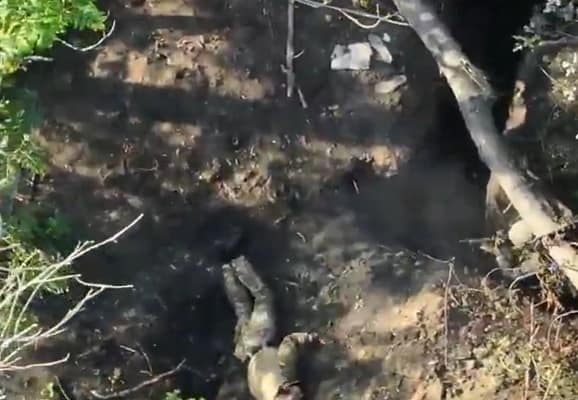
More than 250,000 Russian military personnel have been identified as having died during the war in Ukraine, according to the latest joint investigation by the BBC’s Russian service and independent Russian outlet Mediazona, as mounting battlefield losses intensify pressure on Moscow’s recruitment system.
Mediazona’s latest named tally reached 258,980 deaths as of September 21. The figure is based on publicly available and independently verifiable evidence, including death notices, obituaries, social media posts from relatives, local media reports and announcements by regional authorities. The researchers stress that the list is not exhaustive because many Russian military deaths never become public.
The research was published on the fourth anniversary of Vladimir Putin’s September 2022 “partial” mobilisation, which followed Ukraine’s rapid counteroffensive in the Kharkiv region.
Read more related news:
Russian attack helicopter breaches NATO airspace ‘to once again test air defences’
Brits on holiday in NATO hotspot warned of Russian explosive drones
Commander warns Russia is testing NATO with ‘more dangerous’ covert attacks
ISW warns Russia could try and seize Estonian city in a test of Article 5
The Kremlin has not published an updated official death toll since September 2022, when then-defence minister Sergei Shoigu claimed that 5,937 Russian service members had been killed. That figure was widely dismissed at the time as implausibly low.
The latest independent count is considerably below Western and Ukrainian estimates of total Russian deaths. On September 11, Britain’s Chief of the Defence Staff, Air Chief Marshal Sir Richard Knighton, said British defence intelligence assessed that around 500,000 Russian troops had been killed since the full-scale invasion began, with total Russian military casualties, including wounded, reaching about 1.5mn.
The scale of the discrepancy reflects the difficulty of measuring wartime losses. Mediazona’s named list records only deaths that can be documented through open sources, while military intelligence estimates attempt to account for deaths that remain undisclosed.
The geographical distribution of the confirmed deaths also points to a pronounced regional imbalance. Mediazona’s data shows particularly high losses in poorer and more remote parts of Russia, including Buryatia, Zabaikalsky Krai and parts of the Volga region.
Regions with large non-ethnic-Russian populations have also suffered disproportionately relative to their populations. By contrast, Moscow and other comparatively wealthy cities have recorded considerably lower death rates per head.
The human cost is increasingly being reflected in the Kremlin’s efforts to maintain the flow of recruits to the front.
Russia has so far avoided another politically sensitive nationwide mobilisation of the kind announced in September 2022, instead relying heavily on contract recruitment, large financial incentives and increasingly aggressive efforts by regional authorities to meet enlistment quotas.
A September report by the Conflict Intelligence Team documented the pressure being placed on local authorities to find recruits.
In Bratsk, the recruitment target for 2025 was increased from 548 to 645 people, but only 369 had been recruited by November 1, according to the report. Local officials subsequently visited more than 14,000 addresses and conducted almost 3,000 interviews, targeting groups including debtors, conscripts, foreigners, people with criminal records and orphans. Only one of 261 orphans and care-leavers approached signed a military contract.
Financial incentives have also become central to the recruitment campaign. In Russia’s Mordovia region, authorities have offered large signing payments, while other regions have imposed recruitment targets on local governments and penalised officials who fail to meet them.
Mediazona has separately documented a growing number of cases in which Russians were allegedly deceived or pressured into signing military contracts.
In one case reported this week, a 49-year-old man from Kirov who suffered from epilepsy was allegedly detained by police and pressured into signing a contract before being sent to the front. His wife told Mediazona that he was subsequently reported missing.
Such cases underline the growing tension between the Kremlin’s demand for manpower and the willingness of Russian civilians to volunteer for military service.
For Moscow, the recruitment challenge comes as the battlefield has become increasingly dominated by drones. Russian forces have adapted by relying more heavily on small assault groups, motorcycles and all-terrain vehicles, while Ukrainian drones have made large-scale armoured manoeuvres substantially more difficult.
The result is a war in which Russia continues to generate large numbers of troops but at a substantial human cost.
Knighton said the British estimate of 500,000 Russian deaths formed part of a total casualty figure of 1.5mn. The figures broadly align with estimates published by Ukraine’s military, although neither Moscow nor Kyiv routinely publishes independently verifiable battlefield-loss data.
Mediazona’s research provides a lower-bound count rather than a definitive total. Its investigators explicitly say the 258,980 named deaths cannot capture every Russian military fatality.
But the gap between the independently documented deaths and Western estimates illustrates the scale of losses that may remain hidden from public view — and the growing challenge facing Moscow as it attempts to sustain its war effort without another overt nationwide mobilisation.




Leave a Comment