
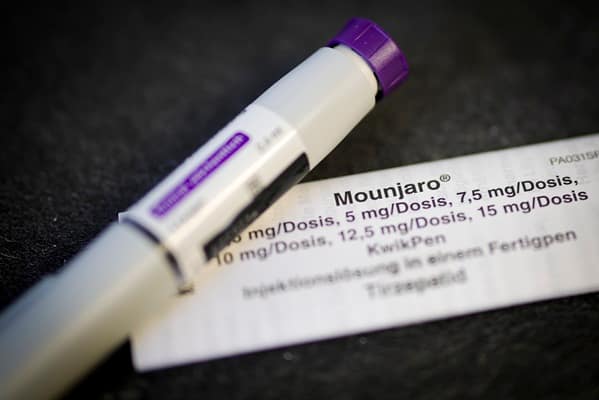
Weight-loss injections such as Mounjaro and Ozempic appear to be having an unexpected effect on British waistlines, with Timpson reporting a 680% increase in customers asking for additional holes in their belts.
James Timpson, chief executive of the high street repair and services chain, highlighted the sharp rise in demand in a post on X.
“You can tell [Ozempic] and Mounjaro are popular… in our Timpson shops we have seen a 680% increase in the number of free holes in customers belts we’ve been doing this year.”
The comments offer an unusual snapshot of the growing popularity of medicines used for weight management in Britain.
Some estimates suggest around 2.4 million people in the UK are prescribed weight-loss medications.
The majority of people taking semaglutide — sold as Wegovy for weight loss and Ozempic for diabetes — as well as Mounjaro, pay privately because access through the NHS remains restricted to people meeting specific eligibility criteria.
The rapid expansion of the market has also prompted greater scrutiny of how weight-management treatments are delivered and funded across the health service.
Wegovy was approved in June in tablet form, potentially broadening the options available to people seeking treatment.
Olivier Picard, chairman of the National Pharmacy Association, said the increase in belt adjustments reflected the wider impact of weight-management treatment.
“It is encouraging to see more and more people needing extra notches in their belts after starting weight management treatments.”
“Obesity is one of the biggest health challenges facing society and weight loss treatment can have a transformative effect on health outcomes for those who are eligible.”
Picard called for greater use of community pharmacies to expand access to treatment through the NHS.
“There must now be a redoubling of efforts within Government and the NHS to use pharmacies to make sure more eligible patients in clinical need can get this for free from the NHS, rather than the current postcode lottery that exists for weight management services via GPs.”
“We are concerned that the NHS rollout remains extremely slow and community pharmacy is ready to support a wider rollout, which will help eligible patients access treatment safely and help mitigate the impact of obesity on the NHS.”
The comments come as demand for GLP-1 medicines has expanded rapidly, transforming the weight-management market and creating a growing commercial industry around treatments that can significantly reduce appetite and body weight in eligible patients.
For retailers and service businesses, the consequences can sometimes be seen in unexpected places — including alterations to clothing and accessories.
Timpson’s figures do not provide evidence of how many customers are taking specific medicines, nor do they establish that the drugs were directly responsible for every additional belt hole. But the scale of the reported increase offers an unusual indication of how the weight-loss boom may be filtering through into everyday consumer behaviour.


Leave a Comment