
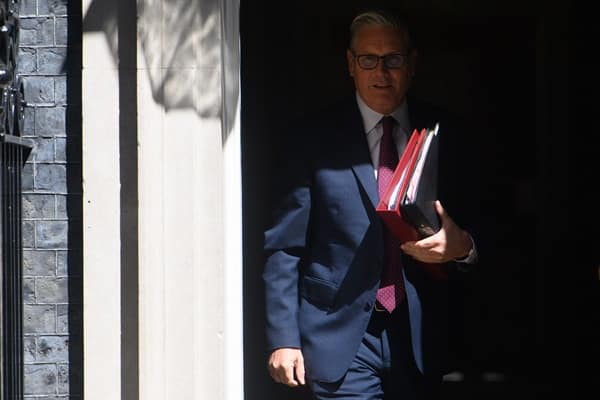
Esther McVey has launched a fierce attack on Sir Keir Starmer over the handling of the Henry Nowak case, claiming the controversy has exposed what critics describe as “two-tier policing” and a police culture overly influenced by diversity and anti-racism policies.
The Conservative MP’s intervention came after fresh revelations about Henry Nowak’s killer, Vickrum Digwa, who was reportedly arrested in 2023 after being accused of stealing ceremonial knives worth £1,000 from a Sikh temple in Southampton before being released without charge.
Digwa was subsequently barred from the temple, with members reportedly describing him as a “dangerous monster”.
The disclosure has intensified scrutiny of the authorities’ previous dealings with Digwa and added fuel to public anger over the circumstances surrounding Mr Nowak’s murder.
Speaking to GB News, Mrs McVey condemned violence directed at police officers during protests in Southampton but argued that Britain’s policing leadership had become consumed by political ideology.
“There is absolutely no justification for attacking the police,” she said. Most police officers are trying to do the right job.
However, she claimed officers had been “brainwashed” into prioritising concepts such as anti-racism, multiculturalism and political correctness over their core responsibilities.
Her remarks come as the political fallout from the case continues to grow. Critics have focused on body-worn camera footage showing officers responding to Digwa’s allegation of a racist incident while Henry Nowak lay handcuffed after being stabbed.
For opponents of current policing policies, the footage has become a symbol of what they view as misplaced priorities within law enforcement.
Mrs McVey argued that Digwa’s previous contact with the police raised further questions.
“To have found out that Digwa had not even so long ago basically been let off, they knew he’d stolen those knives, and yet he wasn’t sentenced in some way or another,” she said. “And this is the two-tier Keir policing that we all talk about.”
The comments place additional pressure on the Government as ministers attempt to contain growing public anger while distancing themselves from accusations that race-conscious policing policies contributed to the events surrounding Mr Nowak’s death.
Mrs McVey also criticised responses from both Home Secretary Shabana Mahmood and Sir Keir, arguing that neither had gone far enough in addressing concerns raised by the case.
She said the Home Secretary should have taken stronger action against diversity, equity and inclusion initiatives within policing and argued that the Prime Minister should have stood “side by side” with the Nowak family.
The row comes as the National Police Chiefs‘ Council reviews elements of its anti-racism guidance following widespread criticism of the language used in the police Race Action Plan.
Police leaders insist the objective of the strategy is to improve trust and outcomes across communities rather than create unequal treatment. Ministers have also defended efforts to tackle racism within policing while acknowledging concerns about how some commitments have been expressed.
For critics, however, the Henry Nowak case has become a watershed moment in a broader debate over identity politics and policing.
Mrs McVey said the controversy represented the culmination of years of concerns about political correctness within public institutions.
“What has happened now,” she said, “has come to a crescendo.”
She said: “It’s infected the police force and it’s infected most of our institutions. We seem to have got captivated by DEI, by critical theories, whether that was race or gender, and all to the downfall of this country.
“What we need people to do is their job, not to be swayed because they have a particular view on a race or gender, and that’s where we’ve got ourselves to. So when people talk about two-tier, well there is a two-tier here – every single police force signed up to being ‘anti-racist’.
In a statement, a spokesman for the Independent Office for Police Conduct said: “As part of our ongoing investigation, we are reviewing a large amount of police body-worn footage which we need to consider the context with other evidence that we’ve obtained, including review material presented during the murder trial as we establish the full circumstances.
“The officers involved are currently being treated as witnesses, however, as with all investigations, this is kept under review throughout.”
As pressure mounts on ministers, police chiefs and the wider criminal justice system, the case is rapidly evolving from a local tragedy into one of the most politically charged law-and-order controversies facing the Government.


Leave a Comment