
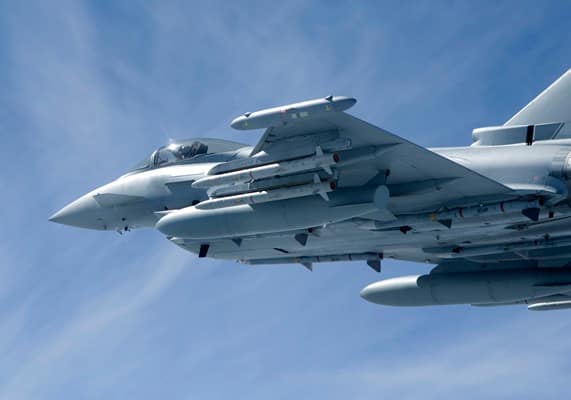
NATO aircraft have shot down a drone that illegally entered Latvian airspace, triggering a brief but intense security alert across the country’s eastern border regions and reigniting concerns over escalating aerial provocations on the alliance’s eastern flank.
Latvia’s National Armed Forces confirmed the incident on Monday morning, stating that allied fighter jets “successfully shot down a drone that entered Latvia’s airspace” after NATO Baltic Air Policing missions were scrambled to intercept the unidentified object.
Residents in the eastern districts of Kraslava and Ludza—both close to the borders with Russia and Belarus—were warned of a “possible threat in Latvia’s airspace” and urged to remain indoors, follow civil defence guidance, and report any suspicious low-flying objects to emergency services.
Read more related news:
Ukraine turns tide as Russian offensive stalls in bloody battlefield grind
Ukraine inflicts severe blow on Russian supply corridor to Crimea
Russia attacks Chornobyl in alarming nuclear warning
Putin’s war unravels as Kremlin insiders warn of ‘full-scale defeat’
At one stage, authorities issued stark instructions advising civilians to adopt the so-called “two-wall principle”, a precautionary measure recommending shelter behind multiple interior walls in case of impact.
Although officials later indicated that “no further action is required at this time”, the situation remained fluid, with subsequent updates warning that the air threat had not yet fully ended in parts of the region.
French Air Force jets operating under NATO command were among those deployed during the interception, underscoring the multinational nature of the response.
The incident is the latest in a growing series of drone-related airspace breaches across NATO’s eastern members, where tensions have steadily risen since the outbreak of the war in Ukraine.
Last month, Latvian forces responded to a similar incursion, while Estonia reported an incident in which a drone was downed after reportedly being diverted by electronic warfare activity. Romania has also recently faced drone-related incidents near its Black Sea coast, including an explosion that prompted evacuations in the port of Constanța.
Officials across the region have increasingly warned that the line between Ukrainian battlefield operations and NATO territory is becoming harder to define, as electronic interference, long-range drones and maritime unmanned systems drift or are redirected across borders.
The President of the European Commission, Ursula von der Leyen, has previously described such incidents as a “direct consequence” of Russia’s war against Ukraine, warning that they are evolving into a “direct threat” to EU border states.
For NATO, the latest breach reinforces a stark reality: even when not deliberately targeted, alliance airspace is becoming an increasingly active frontier of a wider conflict—one where miscalculation, technical failure or electronic interference could carry consequences far beyond the Baltic skies.


Leave a Comment