
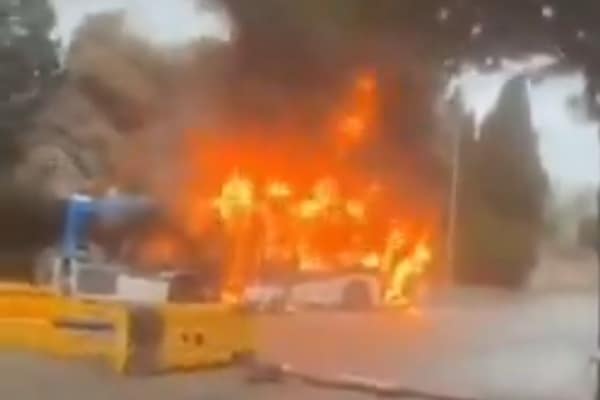
France has been gripped by escalating student unrest, with schools set ablaze, police and firefighters attacked and almost 2,000 people arrested as protests over education conditions have spread across the country.
The demonstrations, which began around complaints about overcrowded classrooms, teacher shortages and heavy workloads, have developed into a wider public-order crisis in several cities.
French Justice Minister Gérald Darmanin said about 2,000 people had been arrested since the protests began, with roughly two-thirds placed in police custody. He said the movement had shifted from high-school demonstrations into a broader disturbance after protesters targeted buses and set schools on fire.
The unrest has spread from the Paris region to cities including Marseille, Strasbourg, Toulouse, Nantes and Lille. Reuters reported that at least 400 schools and other educational establishments were expected to remain closed on Friday as authorities struggled to contain the violence.
One of the most serious incidents occurred in Nantes, where a school was set ablaze. In Marseille, firefighters responding to unrest were forced to flee their vehicle, which was subsequently set on fire, while teachers were reportedly caught in an incident involving petrol.
BREAKING:
Second and third-generation migrants beat down a female policer in France. https://t.co/sqIR8ZpAEo
— Visegrád 24 (@visegrad24) October 1, 2026
Education Minister Edouard Geffray said schools should move classes online where blockades or damage made buildings unsafe.
“Violence will not deprive our students of their fundamental right to education,” he said.
The government has faced mounting pressure over the speed at which the demonstrations have escalated. Interior Minister Laurent Nunez has accused agitators of moving between schools to encourage violence, while the authorities have deployed riot police to areas affected by clashes.
The political dispute has also intensified.
A person close to Prime Minister Sébastien Lecornu said intelligence agencies had briefed a government crisis meeting that the protest movement had been initiated by politicians associated with Jean-Luc Mélenchon’s France Unbowed movement and its allies on the left. France Unbowed has rejected the allegation.
BREAKING:
Massive riots across France.
Young second and third-generation migrants have attacked firemen in Marseille, stealing their fire truck and setting it on fire. pic.twitter.com/nCYMKuibT1
— Visegrád 24 (@visegrad24) October 1, 2026
Louis Boyard, an MP from the movement, said the party had consistently advocated non-violent demonstrations and accused the government of worsening tensions through its response.
Mélenchon has separately criticised the police response, saying he was “very worried about the police violence against young people”. He has pointed to reports of injuries among protesters and argued that the grievances behind the demonstrations should be addressed.
The protests have erupted at a particularly difficult moment for the French government. Lecornu has been attempting to secure support for a 2027 budget containing €54 billion of proposed savings as France confronts mounting fiscal pressure. Public-sector workers have also taken part in protests against spending cuts and proposed pay restraint.
🇫🇷 France’s latest riots didn’t come out of nowhere. They started with angry high school students and years of frustration over the state of their schools.
For about a week, teenagers aged 15 to 18 have been blockading lycées over teacher shortages, overcrowded classes,…
— Mario Nawfal (@MarioNawfal) October 2, 2026
The demonstrations have consequently become intertwined with a broader dispute over the future of France’s public services and the direction of economic policy.
They have also become an increasingly important political issue ahead of next year’s presidential election. President Emmanuel Macron cannot seek a third consecutive term, creating a potentially volatile political environment in which competing parties are seeking to harness public dissatisfaction.
Opposition politicians have sought to link the disorder to wider questions over public order and immigration, while figures on the left have focused on police conduct and deteriorating conditions in schools.
🇫🇷 #France: Heavy clashes between students and riot police have erupted across France over the past week as a wave of school protests over overcrowded classrooms, teacher shortages and deteriorating conditions continues to escalate.
The unrest, which began in the Paris region… pic.twitter.com/KmCaqW4SX9
— POPULAR FRONT (@PopularFront_) October 1, 2026
For the government, the immediate challenge is more practical: restoring order while addressing the grievances that brought thousands of students onto the streets in the first place.
With hundreds of schools closed and violence spreading beyond the original demonstrations, the crisis has become a test of whether France can contain a protest movement before it develops into a broader confrontation over the country’s finances, public services and political direction.


Leave a Comment