
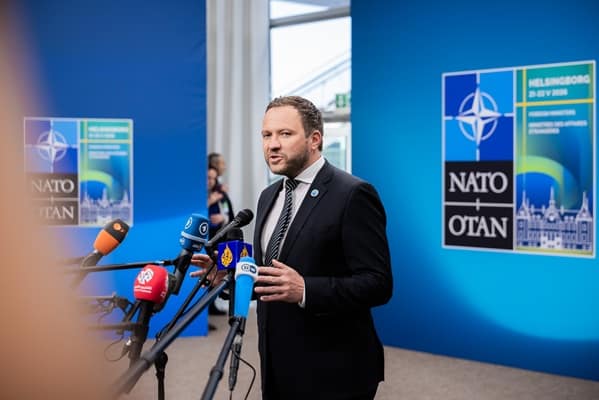
Estonia has accused Russia of ordering a sabotage operation against a defence technology company in Tallinn, escalating tensions between Moscow and one of NATO’s most exposed eastern members.
Estonian Foreign Minister Margus Tsahkna said on Tuesday that an arson attack on Milrem Robotics in August had been directed by Russian intelligence services.
“We can conclude with certainty that the arson attack… in Tallinn was an act of sabotage ordered by the special services of the Russian Federation,” Tsahkna wrote on X.
The Kremlin swiftly rejected the allegation, with spokesman Dmitry Peskov dismissing Tallinn’s accusation as unsupported.
Read more related news:
Putin targets 1.55m active troops as Europe watches nervously
Lavrov warns ‘we will not stand idly by’ threatening Europe with ‘short’ and ‘a completely different war’
Evacuation plans drawn up for NATO corridor exposed to Russian attack
Kremlin told an attack on Estonia could ignite a wider NATO conflict
“Such statements are baseless, ill-considered, have absolutely no relation to reality, and lack any form of reasoning. Consequently, we cannot and will not take such statements seriously,” Peskov told reporters in response to an AFP question.
Tsahkna said those responsible for the attack had been arrested and “no longer pose a threat”. Estonia had also summoned Russia’s ambassador over the incident.
The foreign minister linked the attack to what he described as a wider Russian campaign aimed at destabilising European countries supporting Ukraine.
“This act of sabotage is part of Russia’s broader campaign across Europe, aimed at intimidating us and weakening our support for Ukraine,” he said.
The accusation comes as European governments have increasingly warned of hostile activity attributed to Russia, including alleged sabotage, cyber operations and other forms of pressure below the threshold of conventional military conflict.
Estonia, a member of both NATO and the European Union, has repeatedly raised concerns about Russian activity along the alliance’s eastern flank since Moscow launched its full-scale invasion of Ukraine in 2022.
Estonia, Latvia and Lithuania have all increased defence spending and military preparedness since the invasion, while maintaining strong political and military support for Kyiv.
NATO Secretary-General Mark Rutte backed Estonia’s broader warning about Russian activity.
“Russia continues its reckless campaign of hostile actions against NATO allies. It is trying to weaken our resolve and stop our support for Ukraine,” Rutte told journalists after Estonia made its accusation.
“But Russia is failing. It is failing on the battlefield in Ukraine and it is failing to undermine our unity and support for Ukraine.”
Several of Estonia’s European allies also condemned the reported attack and reiterated their backing for Ukraine.
Lithuanian Foreign Minister Kestutis Budrys said: “Russia’s fingerprints are all over,” arguing that Moscow’s “hostile activities do not stop at Ukraine’s borders”.
Latvian President Edgars Rinkevics said the incident demonstrated the need for continued support for Kyiv.
“More support for Ukraine … will be needed and must be provided,” he wrote.
Swedish Prime Minister Ulf Kristersson described Estonia’s attribution of the attack to Russia as “extremely serious”, adding that it was “directed against Europe as a whole”.
The incident adds to concern among NATO’s eastern members about the potential for Russia to use covert or deniable operations against European targets while the war in Ukraine continues.
Moscow has rejected Estonia’s accusation, leaving the attribution of the Tallinn attack disputed between the two governments.


Leave a Comment