
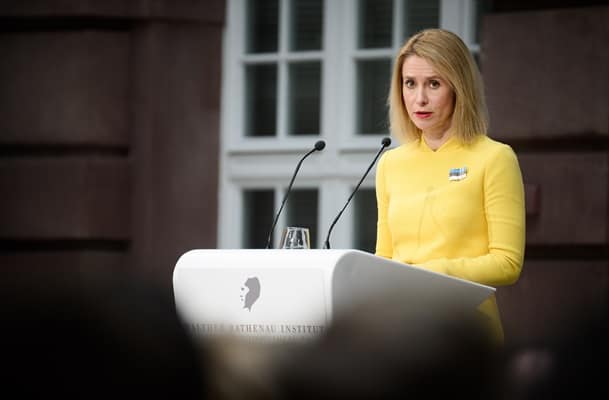
European governments are bracing for a further escalation in Russian hybrid warfare, with EU foreign policy chief Kaja Kallas warning that intelligence indicates Moscow is preparing additional acts of sabotage and attacks aimed at undermining support for Ukraine.
Kallas said the intelligence suggested Russia was seeking to exploit divisions within European societies as governments strengthen their military support for Kyiv.
“We need to be vigilant because we see in the intelligence that Russia is planning more sabotage acts and attacks against our democracy – to divide our society, to intimidate our societies (into) refraining to help Ukraine,” she said ahead of a meeting of EU defence ministers in Brussels on Monday.
The warning comes amid growing concern among European officials over whether Russia could seek to test NATO’s response through a limited military action along the alliance’s eastern borders.
Read more related news:
UK warned we are in the ‘most dangerous era’ as war with Russia may all ready be under way
Evacuation plans drawn up for NATO corridor exposed to Russian attack
Streeting warns Britain faces unprecedented risk of war with Russia
Denmark’s defence intelligence service last week said Russia was “likely” to intensify its hybrid campaign against western countries and warned of a “low but growing” risk of a limited military attack against one or more NATO members bordering Russia.
The assessment has heightened concern that sabotage, cyber attacks and other forms of coercion could increasingly be combined with more direct military pressure.
Germany’s recent allegation that Russia was responsible for an attempted drone attack at Leipzig/Halle Airport has brought renewed attention to the threat of hostile activity on European territory and prompted calls for additional EU sanctions.
Moscow has repeatedly denied involvement in sabotage and hybrid operations against NATO countries, as well as any plans for confrontation with the alliance.
Russia’s embassy in Denmark rejected Copenhagen’s latest intelligence assessment as unsupported by credible evidence and accused western governments of deliberately increasing tensions over Ukraine.
“Our persistent warnings about the destructiveness of such an approach are being ignored,” the embassy said in a written statement.
Denmark’s intelligence service nevertheless warned that Russia could conduct more frequent attacks against Western countries and NATO, with “greater consequences for the countries targeted than in the past”.
It said there was “a low but growing risk” that Moscow could launch a limited military attack against one or several NATO countries bordering Russia.
Thomas Ahrenkiel, head of Denmark’s defence intelligence service, said such an operation could involve isolated strikes against infrastructure supporting Ukraine using long-range drones or missiles.
He also warned of the possibility of false-flag operations involving Ukrainian-made drones, designed to create confusion over responsibility.
Another scenario could involve Russia deploying a limited number of troops into a NATO border region under the stated justification of protecting Russian minorities.
“The aim is not to take over the country, but to divide NATO,” Ahrenkiel said.
A series of incidents involving Danish security forces has reinforced the warnings.
A Russian frigate recently fired two flares towards a Danish military helicopter that had been sent to photograph the vessel in international waters off Denmark. One flare narrowly missed the aircraft, according to the Danish military.
Copenhagen has also raised concerns over the prospect of destructive cyber activity. Denmark’s Resilience Agency said on Thursday that Russia was likely to attempt cyber attacks against the country and subsequently increased its assessment of the threat.
For European governments, the challenge is increasingly how to distinguish individual incidents from a broader campaign while preventing attempts to intimidate governments or fracture public support for Ukraine.
Kallas’s warning suggests that European security planning is now extending beyond the conventional military threat, with sabotage, cyber operations and political interference becoming an increasingly central part of the continent’s confrontation with Moscow.


Leave a Comment