
West Texas Intermediate and Brent crude oil futures are falling by less than half a percentage point, hovering near $79 and $84 per barrel, respectively, following a day of relatively low volatility.
The relative calm in energy market volatility comes amid anticipation of whether the future path of the war in the Middle East will bring us back to the negotiating table, lead to rounds of broader escalation, or keep us in a state of no war and no peace.
Mutual strikes between Iran and the United States continued until sunrise today, in a continuation of the series of attacks extending nonstop over recent days.
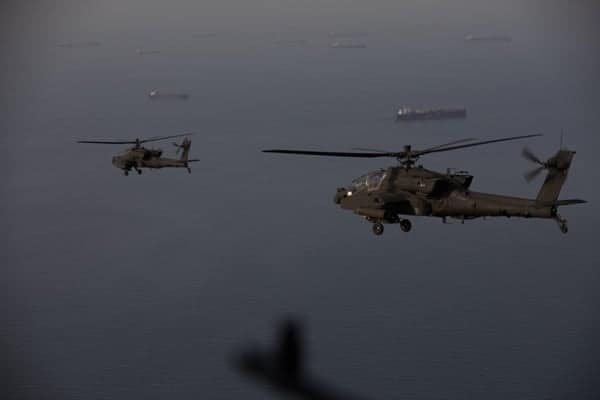
In the meantime, ship traffic through the nearly closed Strait of Hormuz remains very light, with only 7 ships crossing yesterday, Wednesday, down from 13 on Tuesday, according to Kpler data reported by Reuters. This pace of ship flow is the lowest in two months, while The Wall Street Journal reported growing fears among ships regarding crossing under American protection, despite the heavy military presence on land and in the air, and even after the series of continuous strikes against Iranian targets.
As the time horizon of this war extends, we may face a greater amount of upward risks for energy price inflation, with the continuous depletion of US strategic stockpiles, as Energy Information Administration data showed that the Strategic Petroleum Reserve of crude oil recorded a new low at around 316 million barrels late last week, representing its lowest level since 1983. However, what might provide some temporary relief to the energy market is the supply that managed to cross the strait in recent days and during the truce period, whether from Arab countries or Iran.
We will now watch what becomes of the war in the coming hours and days. In the most optimistic scenario, we might see a sudden announcement from President Donald Trump about the resumption of negotiations, which could cause a sharp drop in oil futures.
But as we are used to, this will never mean the end of the war or the reopening of the strait wide, but only an extension of the state of no war and no peace. The resumption of negotiations will focus on the details of implementing the fifth article of the memorandum of understanding on the management of the Strait of Hormuz, which Iran still demands to impose its full dominance over the strait. While there are no substantial indications that Iran is moving toward offering a concession on this matter, we are still waiting for an assessment of the impact that the prolonged US strikes have had on Iranian targets, and whether they have actually succeeded in easing the threat of Iranian strikes on ships, but so far there is nothing to confirm this.
On the other hand, The Wall Street Journal reported, citing US officials, that the recent strikes on Iran have given Trump the ability to choose among more military options. Therefore, if Trump receives an assessment stating that the recent strikes on Iran were effective, he might carry out more strikes in an attempt to dismantle Iran’s ability to obstruct supplies.
However, I believe that if hardline Iran begins to feel backed into a corner, whether this happens somehow or the Trump administration decides to expand the targeting of infrastructure in Iran, it might not target oil tankers, but rather target oil extraction and refining facilities spread across the region. This is what Iran continuously threatens, and I believe it is actually doable. If this narrative begins to manifest, it could potentially send crude prices to new peaks we have not seen since the beginning of the war, even without taking into account the possibility of the Houthis in Yemen entering all-out war.
There is no military solution in the Strait of Hormuz, and this seems to be the consensus of military experts, at least so far. Therefore, without reaching a solid agreement with detailed wording regarding the management of the Strait of Hormuz and the Iranian nuclear program, the risks of escalation will remain high regardless of market pricing. Also, the military solution, whether through continued air and naval strikes, or even in the extreme scenario of landing ground troops on Iranian islands, which talk of has begun to surface again, will take a very long time, which Trump might not be able to tolerate as he may seek to get rid of the effects of this war before entering the midterm elections.
The risks of inflation accelerating again may keep Trump more cautious about prolonging the war, and more inclined to negotiate and even compromise. Gasoline prices are approaching an average of $ 4 per gallon again, according to AAA Fuel Prices, which are now combining with the rise in agricultural commodity futures, especially wheat and corn, amid the hysterical escalation in the Azov and Black Seas on the Russia-Ukraine front.


Leave a Comment