
Donald Trump has warned that Iran could face “a much higher level and intensity” of military action if it breaks from the terms of an agreement with the United States aimed at ending the ongoing conflict, in a stark escalation of rhetoric over the fragile deal.
In a post on his Truth Social platform, the US president said that any continuation of the arrangement depended on Iran’s compliance with what he described as previously agreed conditions, while acknowledging that such adherence remained “a big assumption”.
“If Iran agrees to give what has been agreed to, then Operation Epic Fury will be at an end,” he wrote, without setting out further details of the agreement or the specific consequences of non-compliance.
Mr Trump also suggested that US measures currently in place would be adjusted under the deal, including what he described as a blockade, which he said would be lifted to keep the Strait of Hormuz open to all shipping, including Iranian vessels.
Trump wrote on social media: “Assuming Iran agrees to give what has been agreed to, which is, perhaps, a big assumption, the already legendary Epic Fury will be at an end, and the highly effective Blockade will allow the Hormuz Strait to be OPEN TO ALL, including Iran.
“If they don’t agree, the bombing starts, and it will be, sadly, at a much higher level and intensity than it was before. Thank you for your attention to this matter! President DONALD J. TRUMP.”
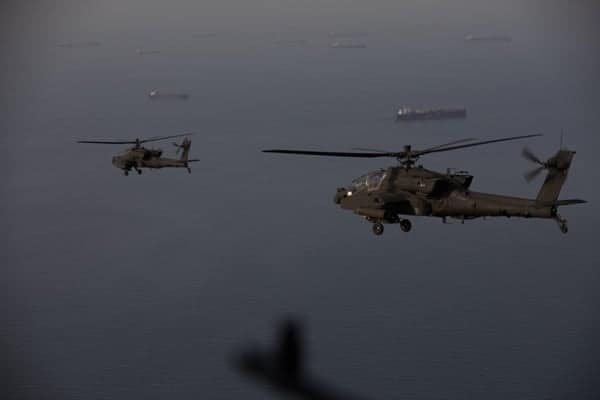
The remarks come amid continuing tensions in the Gulf, where the Strait of Hormuz — a critical global energy shipping route — has long been viewed as a potential flashpoint in any confrontation involving Iran and Western powers.
The US president’s comments mark one of his most explicit recent warnings of escalation, framing the agreement as contingent and reversible should Tehran fail to adhere to its terms.
While Mr Trump did not provide operational details on “Operation Epic Fury”, the language used suggested that the ongoing US military posture in the region remains closely tied to the agreement’s political status.
The warning is likely to further heighten concern among allies and regional powers, who have repeatedly cautioned that even limited breakdowns in understandings between Washington and Tehran risk rapid escalation.
Iranian officials have yet to publicly respond to the latest remarks.
The comments come against a backdrop of longstanding confrontation between the two countries, including disputes over Iran’s nuclear programme, sanctions, and maritime security in the Gulf.
The situation remains fluid, with diplomatic channels under strain and military signalling from both sides continuing to play a prominent role in shaping the conflict’s trajectory.


Leave a Comment