
A suspected drone strike on the United Arab Emirates’ only nuclear power station has dramatically heightened tensions across the Gulf, raising fears of a dangerous new phase in the confrontation involving Iran and its regional rivals.
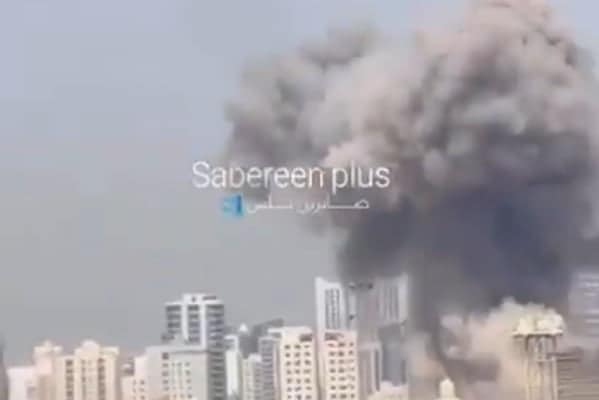
The UAE said three drones penetrated its airspace and struck an electrical generator outside the inner perimeter of the Barakah Nuclear Energy Plant, the $20 billion nuclear facility that supplies roughly a quarter of the country’s electricity.
Officials stressed that no radioactive material had been released and that there were no reported injuries, but the attack nonetheless sparked a major blaze and triggered immediate international concern over the vulnerability of critical infrastructure in the Gulf.
The UAE’s Ministry of Defence confirmed an investigation was underway, warning that the country remained “fully prepared” to confront threats against its sovereignty and security.
Senior Emirati officials condemned the strike in unusually forceful terms. Anwar Gargash described the incident as a “terrorist targeting” of civilian infrastructure and called it a “dangerous escalation” that violated international law.
“No one will twist the UAE’s arm,” he said, warning against efforts to destabilise the region through “chaos and sabotage”.
The attack comes amid an increasingly volatile standoff between the United States and Iran, despite ongoing diplomatic efforts and a fragile ceasefire that has struggled to contain wider regional tensions.
Although no official attribution has yet been announced, suspicion has quickly fallen on Tehran or Iran-linked proxies, particularly given the broader pattern of drone warfare that has increasingly defined conflicts across the Middle East.
The International Atomic Energy Agency said emergency diesel generators had successfully maintained power to one reactor unit and confirmed it was closely monitoring developments.
Its director-general, Rafael Mariano Grossi, expressed “grave concern” over the incident, reflecting growing anxiety about the possibility of military escalation involving nuclear-linked infrastructure.
Regional powers reacted swiftly. Saudi Arabia condemned the strike, while India said it was “deeply concerned” by the implications for regional stability and energy security.
The incident also coincided with further escalation in rhetoric between Washington and Tehran. US President Donald Trump warned Iran that “the clock is ticking” and threatened severe consequences if Tehran failed to comply with American demands.
Iranian military officials responded with warnings of “aggressive and surprise scenarios” should the United States pursue direct military action.
Oil markets reacted nervously to the strike, with Brent crude rising above $110 a barrel amid fears the conflict could further disrupt Gulf energy exports, particularly following the continuing closure of the Strait of Hormuz — one of the world’s most strategically important shipping routes.
The Barakah plant itself represents a cornerstone of the UAE’s long-term energy strategy and is the first operational nuclear power station in the Arab world, developed with substantial assistance from South Korea.
Strategically, the incident marks a deeply worrying threshold for the region. While oil infrastructure has repeatedly been targeted in Gulf confrontations over recent years, attacks involving nuclear-linked facilities carry vastly greater political and psychological consequences, even when no radiation release occurs.
Diplomats and security analysts now fear the strike could accelerate an already dangerous cycle of escalation, retaliation and brinkmanship stretching from the Gulf to Washington — at a moment when regional stability is already hanging by a thread.




Leave a Comment