
Europe moved a step closer to direct confrontation with Russia on Friday after a drone believed to have been launched by Moscow crashed into a residential apartment block inside NATO territory, triggering panic in Romania and prompting fresh warnings that the war in Ukraine risks spiralling beyond its borders.
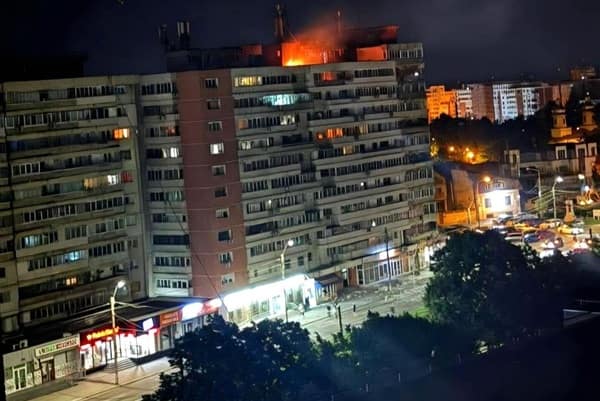
The explosive-laden drone slammed into the upper floors of an apartment building in the eastern Romanian city of Galati during another night of Russian strikes near the Ukrainian border, injuring two people and forcing the evacuation of around 70 residents.
The incident marks one of the most serious known incursions into NATO territory since Russia launched its full-scale invasion of Ukraine in 2022, and immediately intensified fears across Europe about the growing risk of miscalculation and escalation.
Romanian authorities said the drone’s entire explosive payload detonated on impact after it crossed into Romanian airspace during attacks targeting infrastructure in southern Ukraine.
Read more related news:
Fears Putin is preparing ground for wider European confrontation
UK spy chief warns ‘risk of miscalculation’ with Russia is ‘high’
Kremlin issues nuclear warning they ‘will wipe everyone out’ amid UK cruise missile strikes
Russian oil refineries burn as they become Ukrainian drone magnets as precision strikes intensify
Flames tore through the 10th floor of the building as emergency services rushed to the scene before dawn, while residents in nearby districts received emergency alerts on their phones warning them to seek shelter.
According to Romania’s General Inspectorate for Emergency Situations, the blast caused extensive structural damage and triggered a large fire that took hours to bring under control.
Witnesses described scenes of confusion and panic as debris rained down across the residential district.
Two Romanian F-16 fighter jets were scrambled after radar systems tracked the drone entering national airspace, though officials have not confirmed whether the aircraft attempted to intercept it before the crash.
In a sharply worded response, NATO condemned Russia’s “recklessness” and confirmed Secretary General Mark Rutte had been in direct contact with Romanian authorities following the incident.
Allison Hart, a NATO spokesperson, wrote on X: “Early this morning, an apartment building in Romania was struck by a drone as Russia attacked Ukrainian infrastructure near the border.
“@SecGenNATO is in touch with Romanian authorities. We condemn Russia’s recklessness, and NATO will continue to strengthen our defences against all threats, including drones.”
‼️🇷🇺🇷🇴🇪🇺 Russia strikes NATO member Romania
Russian Kamikaze drone hit a residential high rise in Galați, Romania, wounding civilians and sparking a major fire.
Romanian fighter jets were scrambled immediately after the incident.
Romania is a NATO member state, fueling fears… pic.twitter.com/clUWZEZeP8
— War Radar (@War_Radar2) May 29, 2026
The unusually direct language reflected growing alarm inside NATO over the increasingly blurred line between the war inside Ukraine and the security of neighbouring alliance states.
Romania’s foreign ministry described the incident as a “grave and irresponsible escalation”, while European leaders warned that Moscow’s actions were becoming progressively more dangerous.
Ursula von der Leyen said Russia’s war “has crossed yet another line”, adding that Europe would accelerate efforts to reinforce security along NATO’s eastern flank.
She confirmed preparations were underway for a new sanctions package targeting Moscow.
Benjamin Haddad warned that the attack represented a direct threat not only to Ukraine but to the wider European security order itself.
For months, Western intelligence agencies and European defence officials have privately warned that the risk of accidental or deliberate spillover from the war has been steadily rising as Russia intensifies long-range drone and missile attacks near NATO territory.
Russian Shahed-style drones and missile debris have previously entered Romanian, Polish and Baltic airspace during strikes on Ukraine, but Friday’s explosion inside a civilian apartment building marks a dramatic escalation in both symbolism and danger.
It also comes amid wider fears across Eastern Europe that Moscow is increasingly testing NATO’s reactions through hybrid pressure tactics, drone incursions and military intimidation close to alliance borders.
The timing is particularly sensitive.
Across Europe, governments are already grappling with mounting security concerns surrounding Russian drone activity, cyber operations and escalating rhetoric directed at NATO members bordering Ukraine.
Officials in the Baltic states have in recent days warned of growing fears that Russia could seek to destabilise the region through limited provocations designed to probe alliance unity without triggering outright war.
Against that backdrop, the Galati strike has amplified concerns that Europe may be entering a more volatile and unpredictable phase of the conflict.
Although NATO officials stopped short of accusing Russia of intentionally targeting Romanian territory, diplomats privately acknowledge that the distinction may matter little if such incidents become more frequent.
The greatest fear among Western security planners is no longer necessarily a deliberate Russian attack on NATO, but rather a gradual accumulation of dangerous incidents, airspace violations, drone strikes and military encounters that increase the chances of escalation through error, panic or miscalculation.
That anxiety has been compounded by increasingly aggressive rhetoric from Moscow itself.
Russian officials have in recent months escalated warnings directed at NATO states supplying weapons to Ukraine, while Kremlin propagandists have openly discussed strikes against Western infrastructure and military facilities.
At the same time, the battlefield inside Ukraine continues to evolve into a war dominated by drones, long-range strikes and persistent surveillance, blurring traditional front lines and extending the conflict’s reach far beyond active combat zones.
For civilians living near NATO’s eastern frontier, Friday morning’s explosion served as a stark reminder that the war is no longer something happening safely in the distance.
Instead, it is creeping ever closer to Europe’s borders — and, increasingly, across them.


Leave a Comment