
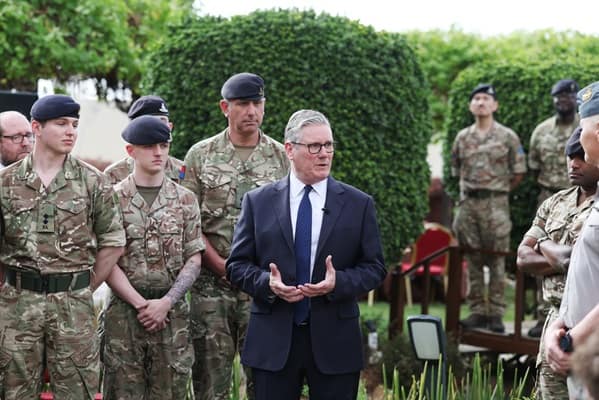
Sir Keir Starmer has rejected any British involvement in a proposed US blockade of the Strait of Hormuz, amid escalating tensions in the Gulf and warnings of further disruption to global energy supplies.
Keir Starmer said the UK “does not support the blockade” and stressed that Britain’s priority is keeping the vital shipping route “open, not shut”, as fears grow over the impact of the conflict on energy prices and economic stability.
The Prime Minister’s remarks follow reports that the United States is preparing to impose a naval blockade on the Strait of Hormuz, one of the world’s most important energy chokepoints, through which around a fifth of global oil and gas passes.
The Strait has become a focal point of global concern since the escalation of conflict involving Iran, with shipping disruptions already contributing to volatility in oil and fuel markets.
Starmer said the UK’s diplomatic efforts are focused on maintaining free passage through the waterway and preventing further escalation. He added that Britain’s objective is to avoid being drawn directly into the conflict, while still using its capabilities to support maritime security operations where appropriate.
“We’re not supporting the blockade,” he said, emphasising that any UK involvement would be limited to measures aimed at keeping the Strait open, including potential mine-clearance and naval support operations.
Starmer told BBC Radio 5: “What we’ve been doing over the last few weeks, and this was part of what I was discussing with the Gulf states last week, is bringing countries together to keep the Straits open, not shut. And, that isn’t a sort of remote issue. All the time the Strait is shut or not free for navigation in the way it should be, that means that oil and gas is not getting to market.
“That means the price is going up. That means everybody listening to this is facing higher energy bills. And I don’t want that to happen. I want their energy bills to be stabilised and lower.
“And so it is, in my view, vital that we get the Strait open and fully open. And that’s where we’ve put all of our efforts in the last few weeks, and we’ll continue to do so. Gulf states last week were really clear with me that they want freedom of navigation, and they’re right about that.”
Starmer was asked if the UK would send naval assets such as minesweepers, and he said: “We’re not supporting the blockade.”
The Prime Minister also highlighted the domestic economic consequences of the crisis, warning that British households and businesses—despite having no role in the conflict—are already feeling the effects through higher energy and transport costs.
The comments come after former US President Donald Trump reportedly announced plans for a blockade of the Strait following the collapse of US–Iran peace talks, raising the prospect of a sharp escalation in global tensions.
Downing Street’s position signals a clear divergence from Washington’s approach, with the UK seeking to balance its alliance with the US against concerns over energy security and inflationary pressure at home.
Analysts warn that any sustained disruption to the Strait could have immediate knock-on effects across oil markets, shipping insurance costs, and airline fuel prices, with broader implications for global growth.
Trump wrote on Truth Social on Sunday: “I have instructed our navy to seek and interdict every vessel in international waters that has paid a toll to Iran.”
He added: “Any Iranian who fires at us, or at peaceful vessels, will be BLOWN TO HELL!”


Leave a Comment