
Europe is increasingly bracing for the possibility that Russia could attempt to widen the confrontation beyond Ukraine, as senior EU officials warn that the Kremlin may seek to test NATO’s unity amid escalating tensions across the continent.
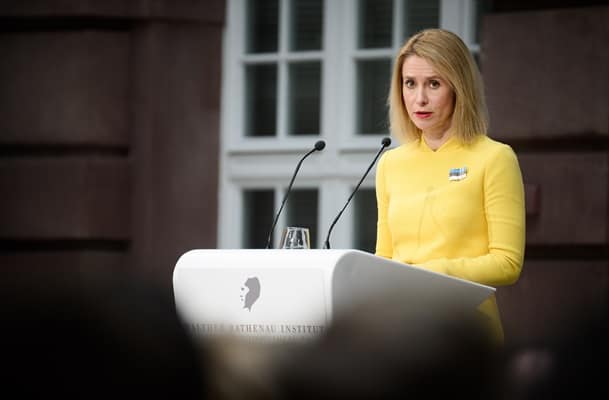
Kaja Kallas warned that European leaders must take seriously the risk of further escalation from Russia, cautioning that Moscow continues to pursue broader strategic objectives aimed at reshaping Europe’s security order.
According to reports in The Wall Street Journal, concerns have intensified in European capitals following Russia’s latest large-scale missile and drone strikes on Kyiv, alongside increasingly aggressive rhetoric directed at NATO member states.
Western officials fear the Kremlin may attempt to pressure the alliance through limited provocations or hybrid operations designed to probe Western resolve without triggering full-scale war.
Recent Russian statements targeting the Baltic states have heightened those anxieties. Moscow has accused Latvia of hosting Ukrainian drone operators involved in attacks against Russian targets — allegations firmly rejected by Riga.
Russia’s defence ministry has also reportedly published information relating to companies across several European countries allegedly linked to Ukrainian drone production, warning of potential “consequences” if military support for Kyiv continues.
European security officials are increasingly concerned that Moscow could attempt to test NATO through limited actions focused on vulnerable strategic regions, including the Baltic Sea and Arctic areas.
Pål Jonson warned that Europe’s security environment had deteriorated significantly over the past two years, with Russia increasingly turning towards hybrid tactics and riskier forms of confrontation.
According to Mr Jonson, European nations must urgently strengthen deterrence capabilities and defence readiness in response to the evolving threat landscape.
At the same time, uncertainty surrounding the future US military posture in Europe has added to concerns among European policymakers.
Reports suggesting Washington could reduce aspects of its military presence on the continent have fuelled fears inside the EU that Moscow may interpret shifting American political signals as an opportunity to intensify pressure on Europe.
European officials also worry that economic strain linked to the war, rising energy costs and political instability within EU member states could weaken long-term Western unity behind Ukraine.
Benjamin Haddad said Russia still appeared determined to redraw Europe’s security architecture and warned that continued support for Ukraine remained essential to maintaining continental stability.
Despite the increasingly tense rhetoric, Western intelligence agencies stress there is currently no direct evidence that Russia is actively preparing a military attack against NATO territory.
However, officials acknowledge that the risk of miscalculation, escalation or hybrid confrontation has risen sharply as the war drags on.
Intelligence assessments also suggest the Russian military continues to suffer heavy losses in Ukraine, potentially increasing pressure on the Kremlin to either intensify mobilisation efforts or seek alternative methods of maintaining momentum.
The conflict itself is also entering a new technological phase, with both sides relying heavily on drone warfare and long-range strikes.
Military analysts describe the emergence of expanding “kill zones” where traditional front lines are becoming increasingly blurred by persistent surveillance, drone attacks and precision strikes deep behind defensive positions.
Against that backdrop, Volodymyr Zelenskyy has continued urging Western allies for additional air defence systems, warning that Ukraine faces growing strain protecting its cities and infrastructure from sustained Russian bombardment.
Meanwhile, Ukrainian military officials rejected reports circulating online that the village of Hraniv in the Kharkiv region had fallen to Russian forces, describing the claims as part of an ongoing Russian information warfare campaign designed to spread confusion and undermine morale.


Leave a Comment