
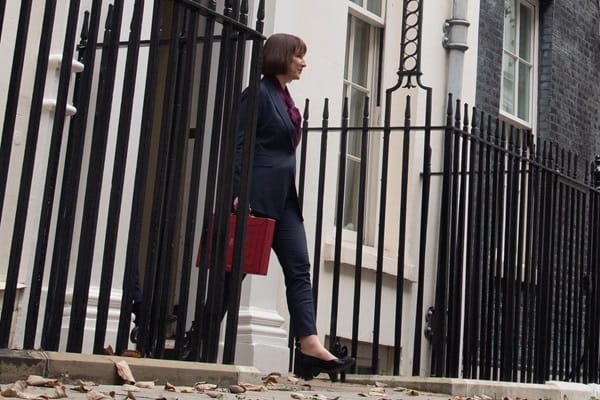
Rachel Reeves has come under mounting pressure after warnings that national security is “not an accountant’s job”, following the resignation of Defence Secretary John Healey in a deepening row over military funding.
Mr Healey quit after what he described as an unacceptable failure by the Treasury and Downing Street to provide sufficient resources for the Government’s long-delayed Defence Investment Plan (DIP), triggering alarm across the defence industry and Westminster.
The crisis has exposed a widening divide at the heart of Government over how to fund Britain’s Armed Forces amid rising global instability, with industry leaders warning that procurement delays have already pushed parts of the defence sector into what one described as “paralysis”.
Kevin Craven, chief executive of ADS — the UK trade body for the aerospace, defence, security and space industries — delivered one of the starkest assessments yet, warning that the consequences of mismanaging the plan would be “of a magnitude far beyond our worst fears”.
Read more related news:
Labour civil war fears grow as Starmer faces mounting pressure
Allies and opponents unite behind Healey after resignation bombshell
Healey quits as ‘Starmer and the Treasury’ will not commit to investing in Defence
“National security and defence of the realm is not an accountant’s job,” he said. “It is imperative that an adequately funded Defence Investment Plan is published as soon as possible.”
His intervention will intensify scrutiny of the Treasury’s role in shaping defence spending, with critics accusing it of prioritising fiscal restraint over military readiness at a moment of heightened geopolitical risk.
Mr Healey’s resignation letter set out the scale of the dispute, directly accusing the Prime Minister of failing to secure the necessary funding and the Treasury of being unwilling to meet what he said were essential requirements for national defence.
“We came into government recognising Britain faced a new era of threat which demanded a new era for defence,” he wrote.
“Since then, you have been unable, and the Treasury has been unwilling, to commit the resources that the nation needs to defend the country at this time of rising threats.”
He said the financial settlement he was presented with for the Defence Investment Plan “falls well short of what is required”, warning that crucial investment would not arrive quickly enough to address urgent readiness needs in the early years of the programme.
Mr Healey added that after informing the Prime Minister he could not accept the proposed settlement, he had “no other option” but to resign.
The Defence Investment Plan itself — first expected last autumn — has been repeatedly delayed amid disputes between the Ministry of Defence and the Treasury over the scale and timing of funding commitments.
Industry figures warn that the uncertainty has had a chilling effect on procurement decisions, with contracts delayed and long-term planning thrown into doubt.
Mr Craven said Mr Healey’s resignation was “a truly damning reflection on the current state of affairs”, adding that it should serve as a wake-up call to ministers.
“It should not take the resignation of an honourable man for that realisation to sink in,” he said.
Defence analysts also described the resignation as a watershed moment.
Ed Arnold, senior associate at the Royal United Services Institute (RUSI), called it “a seismic moment” for the Government and the Ministry of Defence.
He said it was rare for a serving senior minister to step down on principle over defence funding, rather than leaving office and later criticising decisions from the sidelines.
The political fallout is likely to intensify pressure on Rachel Reeves, with critics warning that fiscal discipline is being prioritised over military capability at a time of escalating global threats.
Opposition figures seized on the resignation as evidence of disorder at the top of Government, while defence officials privately expressed concern over the lack of clarity on the future of the investment plan.
For Downing Street, the departure of a Defence Secretary in open revolt represents a serious early crisis, raising questions about cohesion in Government at a moment when Britain’s allies are watching closely.
With the Defence Investment Plan still unpublished and tensions between the Treasury and Ministry of Defence unresolved, the row now threatens to overshadow Britain’s wider defence posture and long-term military preparedness.


Leave a Comment