
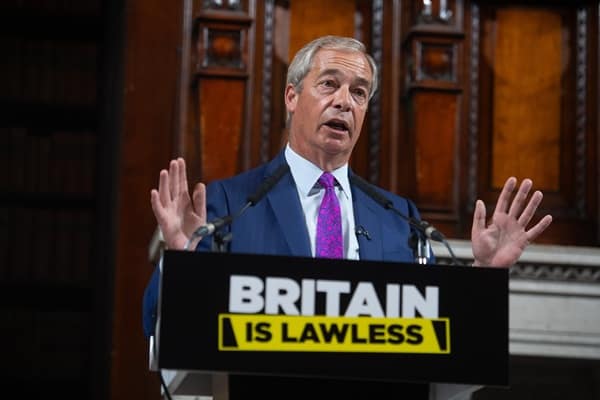
Labour has accused Nigel Farage of posing a threat to Britain’s national security, launching a fierce attack on the Reform UK leader’s long-standing views on Europe and Russia as the country marks a decade since the Brexit referendum.
Writing in The Telegraph, Cabinet Office minister Nick Thomas-Symonds claimed Mr Farage’s opposition to deeper European cooperation had led him to adopt positions that were overly sympathetic to the Kremlin and Russian President Vladimir Putin.
Mr Thomas-Symonds argued that Mr Farage had repeatedly downplayed Russia’s role in the conflict with Ukraine, citing comments stretching back more than a decade.
He pointed to remarks made by the Reform UK leader in 2014, when he said the European Union had “blood on its hands” over Ukraine, as well as comments in 2024 suggesting that NATO and EU expansion eastwards had given Mr Putin a reason to launch his invasion.
The Labour minister said: “So consumed with being anti-Europe, engrossed by an ideological necessity for separation, he has chosen to fall on one side of a worldview. The wrong side.”
In his strongest criticism, Mr Thomas-Symonds warned that allowing such a worldview to influence government policy would represent “an unprecedented threat to national security.
The intervention comes as Reform UK continues to perform strongly in national opinion polls and seeks to position itself as a credible challenger to both Labour and the Conservatives.
However, Mr Farage has recently hardened his rhetoric against the Kremlin. Speaking earlier this year, the Reform UK leader described Mr Putin as “an incredibly dangerous man” and rejected the idea that the Russian president was seeking a fair settlement to the war in Ukraine.
He proves with every week that goes by that he’s not rational, that he doesn’t want a just settlement, and that, frankly, he is an incredibly dangerous man,” Mr Farage said.
The clash highlights a growing political battleground ahead of the next election, with Labour seeking to portray Reform UK as a risk on foreign policy and national security, while Mr Farage continues to argue that Britain’s interests are best served by maintaining distance from European political structures.
Ten years after the Brexit vote transformed British politics, the arguments over Britain’s relationship with Europe — and how to confront Russia — remain as divisive as ever.


Leave a Comment