
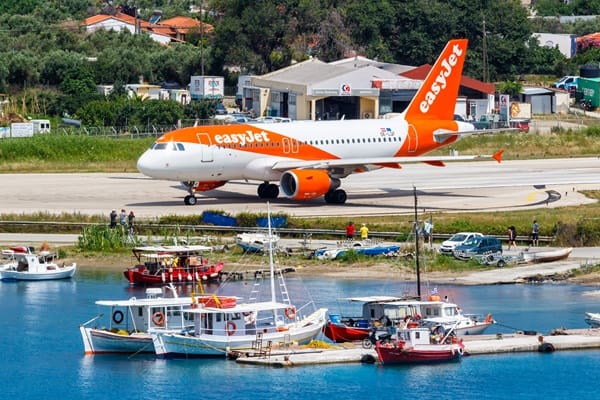
EasyJet has firmly rejected speculation over a potential takeover approach from US investment firm Castlelake, branding the timing of the interest “highly opportunistic” as the airline’s shares come under pressure from rising fuel costs and geopolitical uncertainty.
The budget carrier said it has received no approach, proposal or discussions from Castlelake, despite the firm confirming late last week that it was in the early stages of considering whether to make an offer.
Castlelake, which manages tens of billions of dollars in assets, said after the close of trading in London on Friday that it was evaluating a possible bid, but stressed there was “no certainty” an approach would materialise. Under takeover rules, it has until June 26 to either announce a firm intention to proceed or walk away.
In a statement on Monday, easyJet sought to shut down the speculation, insisting the airline’s board had not engaged with the US investor in any capacity.
“The board of easyJet has not had any discussions with, nor received any approach or proposal from Castlelake,” the company said.
It went on to criticise what it described as the “highly opportunistic timing” of the interest, pointing to what it said was a temporary weakening in its share price driven by disruption in the Middle East and its knock-on effects for jet fuel prices and consumer confidence.
The airline also highlighted what it described as “considerable regulatory, financial and other execution challenges” that would face any potential acquisition of a major European carrier, particularly one with easyJet’s scale and market position.
The comments underline growing sensitivity among airline executives to private equity interest during a period of volatility for the aviation sector, with fuel costs and geopolitical tensions continuing to weigh on sentiment.
easyJet has been hit by a turbulent year in financial markets, with its shares falling sharply as investors assess the impact of higher operating costs and softer forward bookings in parts of the market. The airline has also been exposed to broader concerns over global energy prices following instability in the Middle East.
Despite the pressure, the carrier recently reported half-year losses of £552 million, up around 40pc on the previous year, though it struck a more upbeat tone on summer trading, pointing to resilient demand for holiday travel.
Chief executive Kenton Jarvis said the airline continues to see strong demand in what it describes as the “late booking” market, with customers increasingly reserving flights closer to departure dates.
“Demand seems to be very strong in what we call the late market,” he said. “As we ran through April, demand was very strong. We’re seeing it again in May.”
However, he acknowledged that consumer behaviour remains more cautious further out, with passengers delaying bookings amid uncertainty over prices and the broader economic backdrop.
“As you look further out, people are more cautious,” he added. “People are waiting and watching, but they are booking as you approach, and I expect that strong late booking market to run through the summer.”
The potential interest from Castlelake has added another layer of speculation around the airline’s valuation, which has been sensitive to shifts in fuel prices and demand expectations. Analysts have previously noted that budget carriers can become attractive targets during periods of cyclical weakness, when earnings visibility is reduced and share prices are depressed.
For now, however, easyJet has made clear it regards the approach as premature at best, and opportunistic at worst, signalling resistance to any early-stage attempt to open takeover discussions.
Whether Castlelake proceeds before its June deadline will now be closely watched in the City, with investors weighing the prospect of consolidation in the European aviation sector against the significant financial and regulatory hurdles involved in any such deal.


Leave a Comment