
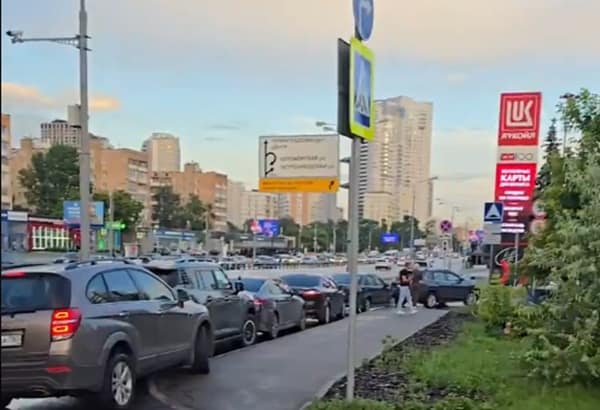
Russian authorities in occupied Crimea have taken the extraordinary step of halting fuel sales to civilians after a sustained Ukrainian campaign against the peninsula’s energy infrastructure exposed growing vulnerabilities in Moscow’s logistics network.
From Saturday morning, petrol stations across Crimea were instructed to stop selling fuel to the public entirely, reserving supplies exclusively for emergency services and state agencies responsible for security and essential operations. The move represents one of the most dramatic signs yet that Ukraine’s deep-strike campaign is beginning to have tangible consequences far beyond the battlefield.
The order follows a series of increasingly sophisticated Ukrainian drone attacks targeting fuel depots, transit terminals, gas infrastructure and transport links across the occupied territory.
For more than two years, Crimea functioned as Russia’s most secure military rear area, protected by layered air defences and linked to the mainland through the strategically vital Kerch Bridge. That assumption is now being challenged.
The gas station of the world is running out of gas. At least in Crimea.
Fuel shortages and queues are being reported across the peninsula at the height of the tourist season. That’s not just an inconvenience for drivers, it impacts hotels, restaurants, transport and local… https://t.co/g8Xb2nlvrj
— Shaun Pinner (@ShaunPinnerUA) June 21, 2026
Ukraine’s strategy has evolved from symbolic strikes to a systematic effort aimed at degrading Russia’s ability to sustain military operations from the peninsula. Rather than attempting to recapture Crimea through a costly ground offensive, Kyiv appears increasingly focused on isolating it.
The objective is straightforward: make Crimea difficult to supply, difficult to defend and increasingly expensive to hold.
Recent attacks have struck fuel infrastructure on both sides of the Kerch Strait, gas compressor stations, radar installations and transport nodes. The cumulative effect is becoming harder for Russian authorities to conceal.
The fuel restrictions announced this weekend suggest officials are no longer confident they can guarantee uninterrupted civilian supplies while simultaneously meeting military demand.
That development carries both practical and symbolic significance.
Practically, fuel shortages risk disrupting everyday life across the peninsula, affecting transport, commerce and public services. Symbolically, they undermine one of the Kremlin’s central narratives since annexing Crimea in 2014: that Russian rule would bring stability, prosperity and security.
Instead, residents are increasingly confronting wartime shortages previously associated with frontline regions.
The decision also highlights the growing pressure on Russia’s air-defence network. Ukrainian drones are appearing with increasing frequency over targets once considered untouchable, forcing Moscow to spread defensive resources across an enormous territory stretching from occupied Ukraine to major Russian cities.
Crimea remains central to Russia’s military operations in southern Ukraine, serving as a hub for logistics, aviation and naval activity. Any disruption to fuel supplies therefore carries implications extending well beyond the peninsula itself.
Whether the shortages prove temporary or develop into a more sustained crisis will depend largely on Russia’s ability to repair damaged infrastructure and secure alternative supply routes. Yet the fact that civilian fuel sales have been halted altogether illustrates how rapidly the situation has deteriorated.
For Kyiv, the development will be viewed as evidence that its drone campaign is achieving precisely what it was designed to do: bring the consequences of the war to territories Moscow once considered safely beyond Ukraine’s reach.
For residents of occupied Crimea, meanwhile, the message is becoming increasingly difficult to ignore. The war is no longer something happening elsewhere.


Leave a Comment