
Vladimir Putin could attempt to provoke a dangerous confrontation with NATO in the Baltic states as his war in Ukraine stalls, according to chess grandmaster and long-time Kremlin critic Garry Kasparov.
Kasparov warned that the Russian president may seek a symbolic “victory over NATO” after what he described as mounting setbacks and exhaustion in the four-year war in Ukraine.
He suggested that any such escalation could focus on small border areas in Estonia or Latvia, potentially including towns such as Narva, in what he portrayed as a calculated attempt to test Western resolve rather than launch a full-scale invasion.
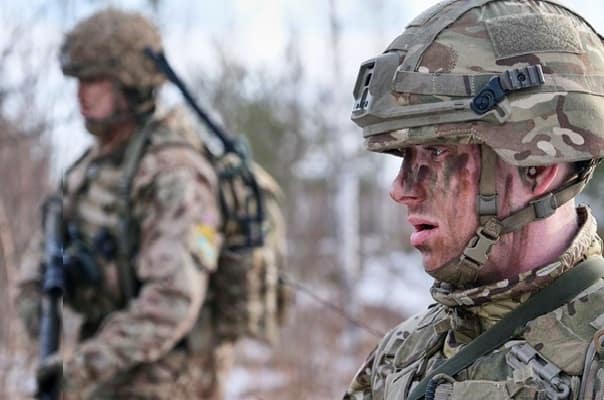
Such a move, he argued, could create a rapid escalation scenario involving NATO troops already stationed in the region, including British forces deployed in Estonia under NATO’s forward presence mission.
“There can only be one success,” Kasparov said, describing what he sees as the Kremlin’s mindset if forced into a prolonged stalemate in Ukraine.
He claimed that a limited incursion into Baltic territory could be used by Moscow as propaganda to present confrontation with NATO as a strategic achievement, regardless of scale.
Kasparov suggested that even small territorial gains could be framed domestically as evidence that Russia had successfully challenged Western military power.
He also argued that frontline NATO deployments in the Baltic states mean any border incident could escalate quickly on the ground, potentially before formal political decisions were made in Brussels or Washington.
“If Russian forces crossed the border in the area of Narva or elsewhere, someone would have to respond immediately,” he said, warning that operational realities could outpace alliance-level decision-making.
His comments come amid continued speculation about Russia’s long-term strategic intentions in Eastern Europe, as Moscow’s war in Ukraine grinds on with heavy losses and limited territorial change.
Western governments have repeatedly warned that any attack on NATO territory would trigger collective defence commitments under Article 5 of the alliance treaty.
The UK currently contributes troops to Estonia under NATO’s enhanced forward presence mission, alongside other allied forces.
Kasparov argued that Moscow’s leadership could be tempted to test those commitments in a controlled or limited way, in order to create political pressure within the alliance.
However, his remarks reflect a broader debate among analysts over whether Russia, weakened by prolonged war, is more or less likely to open a new front against NATO.
No evidence has been presented by Western governments to suggest an imminent invasion of Baltic states, and NATO officials have consistently said they remain confident in the credibility of their deterrence posture in the region.
Still, Kasparov’s warning adds to growing concern that the conflict in Ukraine could increasingly shape tensions along NATO’s eastern flank, particularly in states bordering Russia.


Leave a Comment