
I am writing this from Toronto, Canada, where I’m speaking at the University on a range of topics surrounding Ukraine. Getting here, however, was a reminder of the reality I’ve temporarily stepped away from.
What was once a routine journey out of Ukraine is no longer that.
A 17-hour train ride across the border, now under increased threat as Russia expands its targeting, even of transport infrastructure, followed by a six-hour journey to Warsaw and a nine-hour flight, makes for a gruelling transit.
You arrive exhausted, slightly disoriented, and acutely aware of the contrast.
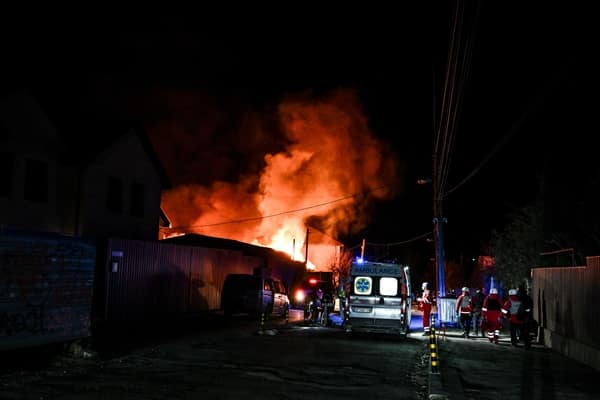
One moment, you are leaving a country under nightly drone and missile attack, in my case, Dnipro struck again as I departed, including a drone hit on a trolleybus depot, the next, you are walking through Midtown Toronto, reunited with family you haven’t seen in decades, sharing a meal as if the war exists in another world.
It doesn’t, unfortunately, and that is why developments in Europe right now matter.
Voices from the Front is a reader-supported publication. To receive new posts and support my work, consider becoming a free or paid subscriber.
Top of Form
Bottom of Form
The removal of Viktor Orbán marks a potentially decisive shift in Europe’s political landscape at a time when unity has been strained by war fatigue, domestic pressures, and diverging strategic priorities.
For Ukraine, the implications could be immediate, and substantial.
At the centre of this shift is the long-delayed financial support package, worth approximately €90 billion, which had been entangled in political resistance, however, Orbán is no longer able to obstruct consensus with momentum building once again behind funding mechanisms designed to stabilise Ukraine’s economy, sustain its war effort, and reinforce long-term reconstruction planning.
For months, Hungary under Orbán acted as a brake on collective European action, particularly on sanctions, aid, and unified messaging toward Moscow. His removal may clear the immediate obstruction, giving EU institutions more room to act decisively, and crucially faster, but the question is how long that window stays open. Figures like Robert Fico in Slovakia, or potential shifts in Bulgaria, could just as easily step in to fill the same role, slowing or complicating consensus once again.
There are also reports emerging from Hungary of internal upheaval following the election, allegations of corruption, potential legal exposure tied to the foreign office, and even claims of document destruction. Whether these hold weight remains to be seen, but what is clear is that this election could have longer-term consequences beyond Budapest.
For Kyiv, the key takeaway is far simpler, finally movement.
The release of funding on this scale would allow Ukraine to stabilise macroeconomic pressures, maintain military procurement cycles, and invest in resilience infrastructure, particularly energy systems repeatedly targeted by Russian strikes.
But while Brussels may now move faster, the battlefield reality remains unchanged and if anything, civilian targeting by Russia has escalated.
War reality check: Five key assessments
Despite political shifts, the war continues to follow a far more stubborn trajectory.
-
Belarus: Noise, Not Action
In my view, there remains only a remote chance that Belarus will enter the war as a direct combatant. While President Zelensky has warned of increased activity, the indicators for full-scale involvement remain limited.
That said, Belarus still serves a purpose, as a pressure point. Even the perception of a threat forces Ukraine to stretch resources across a wider front, something Kyiv can ill afford as manpower challenges persist.
Watch for increased U.S. diplomacy with Belarus and dictator Alexander Lukashenko, alongside any further easing of sanctions.
-
U.S. Sanctions Policy: Predictable Contradictions
As previously assessed, Washington has once again extended sanction waivers on Russian seaborne oil. The Office of Foreign Assets Control issued a new waiver effective from 17 April to 16 May.
This continues to inject liquidity into Russia’s war economy, a contradiction that cannot be ignored.
Compounding this is the broader geopolitical picture: Russia’s support to Iran, including intelligence sharing and drone technology, creates a paradox where U.S. policy indirectly sustains a system that threatens its own interests and personnel.
Any loss of American life in Iran would quickly bring this contradiction into sharp focus.
-
Donbas Objectives: Still Out of Reach
Barring a major strategic shock, and I simply don’t see one coming, whether through a peace settlement or the use of CBRN weapons, it remains highly unlikely Russia will capture the remainder of the Luhansk and Donetsk oblasts by 30 September 2026.
Despite sustained offensives, gains remain incremental, and very costly.
Watch for a renewed offensive push, potentially involving Belarus as a supporting pressure axis as Putin becomes increasingly desperate to secure Donetsk, a goal he has pursued since 2014.
-
Ceasefire Prospects: Near Zero
A negotiated ceasefire in 2026 remains highly unlikely as both sides are locked into fundamentally incompatible war aims.
At the same time, shifting U.S. political signals, including rhetoric around NATO and broader global engagements, risk emboldening the Kremlin rather than restraining it.
There is also a growing risk this war slips further down the international agenda, particularly if Ukraine concludes Washington is no longer fully aligned, a conclusion many agree has already been accepted by Kyiv.
-
Ukraine’s Adaptation: Holding the Line
Ukraine has adapted effectively to Russian tactics introduced in 2025. These adaptations have stalled rapid advances and inflicted significant casualties during the opening phases of Russia’s latest offensive.
There is also a noticeable shift in tone among Russian military bloggers, with increasing signs of frustration and discontent — something that has been building for some time.
If amplified, these voices could begin to shape broader narratives inside Russia.
I woke up to the sound of it again, the kind of noise you don’t forget. Ballistics, drones, air defence trying to claw something back out of the night sky while a city full of civi…
Dnipro under fire as Ukraine aid debate turns into moral showdown
Europe now appears ready to move with greater cohesion, the United States, however, continues to send mixed signals. On one hand, sanctions frameworks remain in place, on the other, waivers and policy adjustments ease pressure on Russia’s most critical revenue streams, particularly energy, while also softening positions toward Belarus.
This duality risks undermining the broader strategy and Washington’s ability to present itself as a credible and impartial broker in any future negotiations. What we are witnessing is no longer a war of manoeuvre, but a grinding contest of systems, largely because Russia has failed to achieve its strategic objectives at the speed it intended. Ukraine, meanwhile, has prevented collapse and continues to hold defensive lines under immense pressure with neither side positioned for a decisive breakthrough.
Yet escalation remains embedded in the system, and without a credible political off-ramp, for which none currently exists, the war will continue to consume resources, lives, and regional stability.
U.S. Treasury’s Office of Foreign Assets Control issues General License 134B, extending authorization for the sale and delivery of Russian crude oil through May 16, 2026.
Orbán’s removal may accelerate European decision-making and unlock vital funding, but it does not fundamentally alter the trajectory of the war. The €90 billion package, if released, will buy Ukraine time, time to fight, adapt, and endure, but it will not end the conflict.
For now, Ukraine holds, and Europe may finally be moving with greater unity, but on the ground, the war remains what it has been for months, even years, brutal, static, and unforgiving. JD Vance’s comments on halting aid to Ukraine, which he described as one of his “finest moments,” have not only insulted many in Ukraine, but also raise serious questions about his intent and positioning, particularly after months of promoting a so-called peace plan.
Unless something dramatically shifts, I see very little changing, but watch closely an increasing number of decisions coming out of Washington appear, remarkably, to serve Moscow.
That should concern everyone.


Leave a Comment