
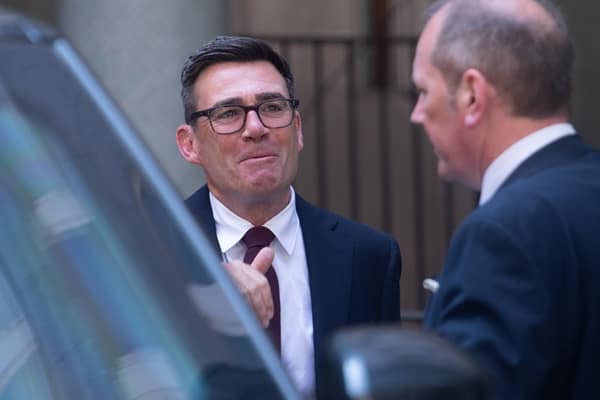
Andy Burnham has launched his premiership with an immediate cost-of-living intervention, announcing that VAT on household electricity bills will be abolished from October in a move designed to ease pressure on millions of households before winter.
The reduction, which will cut VAT on domestic electricity from 5 per cent to zero from 1 October, represents the first major fiscal decision of Burnham’s administration and signals an early attempt to distinguish his economic agenda from that of his predecessor, Sir Keir Starmer.
The government said the tax cut would be financed by cancelling the previous administration’s proposed digital ID programme, arguing that scrapping the scheme would free resources for more immediate household support.
However, the funding mechanism has quickly come under scrutiny.
Darren Jones, a close ally of Sir Keir Starmer who left government following Burnham’s Cabinet reshuffle, questioned whether the savings could genuinely finance the policy.
“The Digital ID programme was unfunded,” Jones wrote on X. “The government will have to set out how it will pay for its new policies at the Budget.”
His intervention raises broader questions about the fiscal framework underpinning Burnham’s wider economic programme. With the Prime Minister promising greater public investment alongside measures to reduce living costs, markets will be looking for reassurance that new spending commitments are matched by credible financing.
The Conservative opposition echoed those concerns. Shadow defence secretary James Cartlidge argued that the policy risked failing basic fiscal scrutiny if the identified savings had never been allocated in the first place.
“If you’re going to have policies to deal with it, they’ve got to last more than a few minutes in terms of scrutiny,” he said.
Yet the announcement has also attracted support from consumer groups.
Matt Copeland, of fuel poverty charity National Energy Action, welcomed the measure as a practical step that would reduce household bills while making electricity-based heating technologies, including heat pumps, more financially attractive.
The decision also reinforces Burnham’s broader political message that government should play a more active role in reducing the cost of essential services.
Whether this marks the beginning of a sustained programme of intervention or merely an opening gesture will become clearer when Chancellor John Healey presents the government’s first Budget.
For now, Burnham has delivered an immediate tax cut. The next challenge will be convincing Parliament, financial markets and taxpayers that it is supported by a sustainable fiscal plan.


Leave a Comment