
Britain is preparing to make foreign defence contractors invest in British jobs, factories and technology in return for lucrative military contracts, borrowing a policy Norway has used for decades to extract industrial benefits from overseas suppliers.
John Healey, the Defence Secretary, cited Norway’s involvement in the construction of Britain’s new Type 26 frigates on the Clyde as an example of the principle behind the government’s new offset policy, unveiled in Glasgow.
Asked how Scotland would benefit from the Defence Investment Plan, Healey said the government would prioritise British industry but would also demand something in return when it had to purchase military equipment abroad.
“Defence is our number one priority. We also announced today the defence secretary and policy, where people have seen this is a government that will direct our defence investment first and foremost in British jobs and British businesses. But there will be things that we need to buy from abroad and from allies.
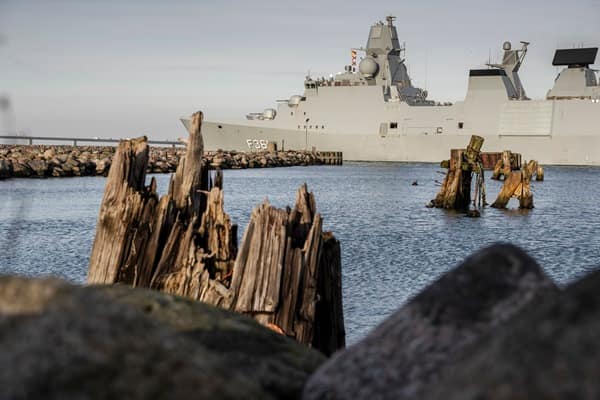
“So Norwegians, for instance, are part procuring some of this portion behind us, and they will require us because they have a policy that we’re now introducing for the first time ever in Britain, which we call an offset policy. We will buy some of the things the Norwegians produce that we can’t here.
“Now, in future, when Britain places contracts abroad, we’ll make sure that those we place those contracts with invest in Britain as well, jobs, business support, innovation, so that we can make sure that every pound of British taxpayers’ money works twice. It works for the national security of this nation, and it works also to reinforce jobs and businesses in the future of this country, including across the UK here in Scotland.”
The policy marks a significant shift in Britain’s approach to defence procurement, moving towards a system in which overseas suppliers are expected to deliver measurable economic benefits alongside military equipment.
Norway provides the immediate precedent. Oslo has ordered five Type 26 frigates from Britain in a £10bn agreement, supporting about 2,000 jobs on the Clyde and representing the largest warship export deal in a generation.
But Norwegian industry expects work in return. Its industrial cooperation regime, established decades ago, requires foreign suppliers of significant defence equipment to place business with Norwegian companies.
Britain now intends to apply a similar principle in reverse.
Under the new framework, overseas contracts worth more than £50mn will be considered for offset requirements. Suppliers could be required to deliver benefits worth up to the entire value of their contract through British employment, apprenticeships, new factories, investment in domestic suppliers or technology transfers.
A new central Offset Authority will negotiate, value and monitor the arrangements, with the policy applying to selected procurement programmes from April 2027.
The ambition is to extract a second dividend from Britain’s growing defence expenditure: not simply the equipment needed to strengthen national security, but the industrial capacity, skills and supply chains required to sustain it.
For Scotland, where the Clyde remains one of the country’s most important naval manufacturing centres, the policy could offer opportunities extending beyond domestic warship orders.
The challenge will be ensuring that promised investment translates into lasting industrial capability rather than contractual accounting exercises. Ministers will need to demonstrate that the new approach delivers genuine additional jobs, technology and manufacturing capacity — rather than simply shifting existing business between suppliers.
The message to international defence companies is clear: access to British military contracts may increasingly come with a price beyond the equipment itself.


Leave a Comment