
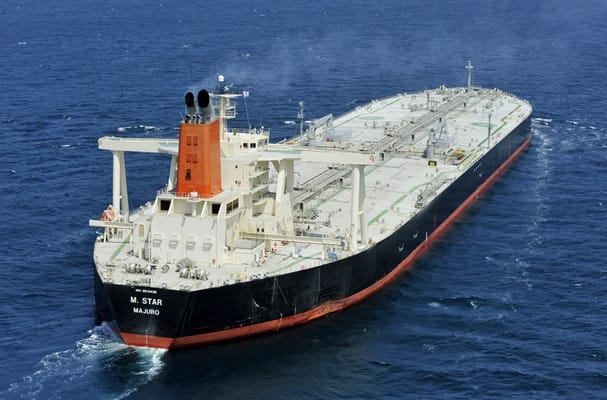
At this stage, oil’s rise is no longer simply a direct reflection of lower production or partial supply disruptions. Instead, it represents a broader repricing of global energy risks.
WTI crude is trading near $91.00 per barrel, while Brent has moved above $100, as geopolitical risks intersect with shipping disruptions, higher insurance costs, and shortages of certain refined products, particularly diesel.
In my view, the key question for markets is no longer whether oil can keep rising, but how far this rally can extend before the market’s rebalancing mechanisms kick in.
What makes the current environment particularly significant is that the oil market is no longer dealing with a single shock that can be easily contained. Instead, it faces an interconnected web of risks stretching from the Strait of Hormuz to the Bab el-Mandeb and from Saudi Arabia’s pipelines to refining facilities.
Such risks are driving what can be described as a “geopolitical risk premium” — a premium that does not simply disappear because some barrels return to the market. The cost of transporting and insuring each barrel, longer shipping routes, and the risks of delivering crude to refineries have all become part of the final price.
Data from the U.S. Energy Information Administration confirms that higher freight and insurance costs, combined with disruptions to shipping routes, are adding clear upward pressure to crude prices delivered to refiners.
This helps explain the current paradox: oil flows from the region are improving, yet prices are not retreating as quickly as the return of supply might suggest. The market’s logistics are far more complex than simply counting barrels produced. Some supplies have resumed passing through the Strait of Hormuz, while Gulf producers have turned to alternative routes and shipping arrangements to reduce their reliance on the most exposed corridors. Saudi Arabia has also restored a significant portion of its crude transportation capacity through the East-West pipeline, with flows reaching around 5.8 million barrels per day, providing an important outlet for the Kingdom’s exports.
However, the recovery in crude flows does not necessarily mean a return to normal market conditions. Crude may still reach consumers, but refined products — particularly diesel — continue to face more severe bottlenecks. In my view, this is a crucial factor when assessing the market’s next phase. Strong diesel demand and elevated refining margins are encouraging refiners to increase their crude purchases, meaning pressure on crude prices can persist even as some supply indicators improve. The EIA has also pointed to tightness in the global diesel market as an additional factor supporting crude demand, while U.S. distillate inventories have remained below their seasonal averages.
At the same time, we should avoid the trap of interpreting every price increase as the start of an open-ended bullish cycle. High prices carry the seeds of their own resistance. Prolonged periods of elevated oil prices tend to weigh on consumption, encourage producers outside the region to increase output, prompt governments to tap strategic reserves, and accelerate efforts to find alternatives to Gulf barrels. In the United States specifically, the EIA expects crude production to reach a record 14.3 million barrels per day in 2027, up from 13.9 million barrels per day in 2026. This could limit the scale of any prolonged global supply deficit.
In the short term, however, risks appear tilted toward higher prices. The EIA has raised its forecast for average Brent prices in the fourth quarter of 2026 to $105 per barrel, $14 higher than its previous estimate, as it expects continued constraints on Middle Eastern flows and a further decline in global inventories of roughly 700,000 barrels per day during the fourth quarter. It has also raised its forecast for the 2026 average Brent price to $96 per barrel, while expecting the average to decline to $84 per barrel in 2027 if flows improve and inventories begin to rebuild.
In this context, I believe the $100 level for Brent has become more than just a psychological threshold. It represents a genuine test of the market’s ability to absorb the geopolitical shock without allowing it to evolve into a broader supply crisis. A sustained break above $100 would likely require a fresh catalyst, such as an expansion of attacks on critical energy infrastructure, a further decline in tanker movements, or disruptions to major alternative supply routes. By contrast, if flows continue to recover gradually, the $100 level is more likely to become a formidable resistance zone than the launchpad for an unlimited rally.
As for WTI crude, the spread between WTI and Brent also reflects the U.S. market structure and its greater ability to source supplies from both domestic and international producers. Therefore, WTI remaining elevated near $91 per barrel while Brent stays above $100 partly underscores that the center of gravity of the current energy crisis lies outside the United States—particularly in the security of global supply and the cost of transporting it.
Ultimately, I believe the oil market has entered a new phase in which the traditional “supply versus demand” equation alone is no longer sufficient. Geopolitical and logistical risks have become fundamental components of pricing, while improving supply flows provide a counterforce that prevents prices from spiraling completely out of control. As a result, the most likely near-term environment is elevated volatility, with the geopolitical risk premium remaining firmly embedded in prices, rather than a straightforward, uninterrupted upward trajectory.
If a fresh shock hit critical infrastructure or disrupted navigation through the Strait of Hormuz, a move above $100 would become increasingly likely. Conversely, if Saudi Arabia and other Gulf producers continue restoring export routes and global inventories begin to rebuild, the market could eventually find a path toward stabilisation. The real battle, therefore, is not simply between $90 and $100, but between the market’s ability to rebuild its supply cushion on one side and geopolitical risks that continue to erode that safety margin on the other.


Leave a Comment