
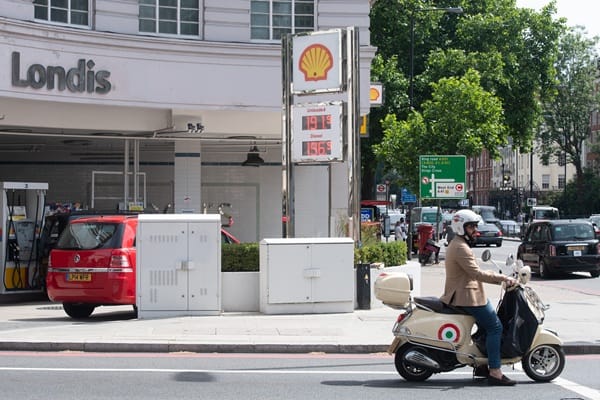
UK diesel prices are approaching the £2-a-litre threshold as a tightening global market for refined fuels threatens to push up costs for motorists, hauliers, farmers and businesses.
The average UK diesel price has reached about 198.4p a litre, according to the latest Fuel Finder data, up 15.3p over the past month. Petrol is averaging about 173.7p.
The increase comes as the international diesel market faces an increasingly severe supply squeeze. Russian refinery disruptions, reduced Middle Eastern exports and shipping problems have removed significant volumes from global markets, while refineries are operating at high utilisation rates.
Reuters reported this week that Middle Eastern diesel shipments had fallen by about half between March and August compared with the previous year, while Russia’s diesel export restrictions have further tightened supplies. European diesel futures have more than doubled since the beginning of 2026.
The squeeze has exposed the UK’s reliance on imported diesel. Britain imports about 55% of its road diesel, according to Fuels Industry UK, with the US accounting for 31% of diesel imports in 2025.
Government figures show that more than two-thirds of UK diesel imports in 2024 came from the US, Netherlands and Belgium combined.
Howard Cox, founder of FairFuelUK, said: “The UK is dangerously exposed on diesel. We import the vast majority of what we use, and almost 70 percent of it comes from just three places — the US, the Netherlands and Belgium. When those supply routes tighten, British drivers get hammered overnight. No other major economy is this dependent, this vulnerable, or this quick to pass global shocks straight to the pumps.”
The prospect of tighter US exports has added to concerns about the UK’s exposure to international markets. Fuels Industry UK chief executive Elizabeth de Jong said recent discussions in Washington had demonstrated the risks of relying too heavily on overseas production.
“The UK continues to need fuels – from transport to chemicals, agriculture and defence,” she said. “The recent discussion in the US around diesel exports has shown once again that we cannot solely rely on overseas production for domestic energy security.”
The latest squeeze also follows the closure of the Grangemouth and Lindsey refineries in 2025, which reduced UK refining capacity by almost a quarter, according to the industry body.
Cox said: “This is a structural weakness the Government refuses to acknowledge. Every geopolitical flare-up becomes a price spike for UK motorists. FairFuelUK is calling for urgent action: transparency, domestic resilience, and a fuel pricing system that doesn’t leave drivers paying for every global crisis.”
FairFuelUK is calling for greater transparency over wholesale-to-retail pricing, measures to strengthen domestic diesel resilience, changes to fuel duty and closer monitoring of US export policy.
For households, the immediate concern is the speed with which higher wholesale costs are reaching forecourts. For businesses dependent on road transport, sustained diesel inflation could feed through into freight, food and other operating costs.
The global shortage may not be resolved quickly. Analysts cited by Reuters expect diesel market tightness to persist into 2027, leaving the UK exposed to further price volatility if geopolitical disruptions continue.
The approaching £2 threshold therefore represents more than a psychological milestone for motorists: it is a measure of how global disruptions in refining and trade are increasingly feeding directly into Britain’s domestic economy.


Leave a Comment