
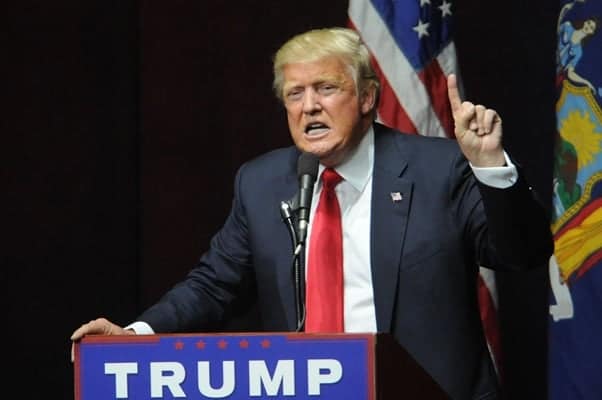
Donald Trump reportedly told former prime minister Keir Starmer that his government’s policies were “stupid” and urged him to tighten Britain’s borders and deport migrants, according to a senior former White House official who said she witnessed the exchange.
Karoline Leavitt, the former White House press secretary, recalled the alleged confrontation during a recent podcast interview with US broadcaster Sean Hannity, describing a private lunch between Mr Trump and Mr Starmer in Britain last year.
According to Ms Leavitt, Mr Trump launched into an unusually blunt assessment of the British government’s immigration policies.
“He’s like your policies here are so stupid, you need to close your borders. You need to deport these people you have in your country,” she said.
Ms Leavitt also recalled Mr Trump telling Mr Starmer: “I know your country, I know your people, and they hate what you’re doing.”
She said Mr Starmer was “just sitting there” as the US president delivered his criticism.
Ms Leavitt could not remember precisely where the lunch took place, although she believed it may have been at 10 Downing Street.
“And this in his house, in his country, we’re not even at The White House, we’re not even on our own territory,” she said.
Asked by Mr Hannity whether she found the episode entertaining, Ms Leavitt replied: “Of course.”
The account provides a striking contrast with Mr Trump’s public assessment of Mr Starmer’s successor, Andy Burnham, after the pair held their first meeting in New York.
Asked whether he believed he could do business with Mr Burnham, Mr Trump replied: “Yeah I do.”
“I think he’s a natural business person, we’ve had a lot of discussions, even before this meeting we were talking with each other numerous times on the phone.”
“He gets it. He understands what he has to do,” Mr Trump added.
Mr Trump also said the US-UK relationship was “more up” under Mr Burnham than it had been when Mr Starmer was prime minister.
The comments underline a sharp change in tone between the Trump administration and Downing Street following the change of government, although the two accounts concern different settings and subjects.
During his meeting with Mr Trump, Mr Burnham said he had “established a good connection” with the US president and that the pair had “taken that further today”.
The discussions covered trade, energy and immigration, according to the prime minister.
The reported Starmer exchange is particularly notable because Mr Trump has repeatedly made border security and immigration central themes of his political platform, while successive British governments have faced intense pressure over irregular migration and the number of small-boat crossings.
Ms Leavitt’s account, however, is a recollection of a private conversation and does not provide an independent transcript of the exchange. Mr Starmer’s response to the alleged remarks was not included in the account.
The contrast nevertheless illustrates the highly personal nature of Mr Trump’s approach to international relationships, where private criticism can sit alongside public diplomatic engagement.
For Britain, the change in leadership has coincided with an effort by Mr Burnham’s government to establish a closer working relationship with Washington, while addressing some of the issues — particularly immigration, energy and defence — that have generated tension between the two countries.
Mr Trump’s description of Mr Burnham as someone who “gets it” marks a significantly warmer public tone than the one described by Ms Leavitt at the earlier lunch with Mr Starmer.


Leave a Comment