
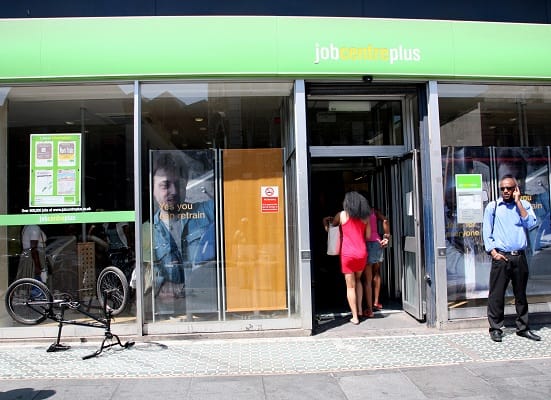
Britons’ sense of job security has fallen to its lowest level in three-and-a-half years, while households are cutting back on major purchases as expectations of higher borrowing costs intensify, according to new consumer data.
Workers across almost every sector reported feeling less secure about their employment in September, with only IT and telecoms bucking the trend, according to the latest S&P Global UK consumer index.
The measure of job insecurity reached its highest level since February 2023, with retail workers recording the greatest concern as the sector contends with higher employment costs, weaker consumer demand and supply-chain disruption linked to the Iran war.
The deterioration in employment confidence came alongside a broader weakening in household sentiment. The consumer sentiment index slipped to 42.7 in September from 42.9 in August, remaining well below the 50-point threshold that separates broadly positive and negative sentiment.
S&P Global said the latest reading pointed to “notable strain” on financial confidence across UK households.
The survey, based on a panel of 1,500 households, also found that consumers continued to rein in spending during September, with sentiment falling to a three-month low.
Households remained reluctant to commit to large purchases such as cars, holidays and appliances, signalling growing caution over future finances.
At the same time, consumers continued to run down their savings at a rapid pace. S&P Global linked the trend to concerns over employment and income, alongside an increasing reliance on credit.
Expectations for higher interest rates have also become increasingly widespread.
Some 53 per cent of respondents said they expected the Bank of England to raise interest rates, compared with just 12 per cent who anticipated a reduction.
The findings come after the Bank kept interest rates unchanged last week but indicated that the case for an increase was strengthening as energy prices rose following the Iran war.
Maryam Baluch, economist at S&P Global Market Intelligence, said: “September data show a downbeat mood spreading across UK households as improved sentiment surrounding the new government is eroded by renewed worries over energy prices, the cost of living and job prospects.
“Job insecurity rose to its highest level in more than three-and-a-half years, highlighting a growing disconnect between rising economic growth and perceptions of employment security.
“At the same time, expectations that interest rates will begin to rise in the coming months have become more entrenched, adding to concerns about household finances.”
The combination of weaker employment confidence, depleted savings and growing expectations of higher borrowing costs risks putting further pressure on discretionary spending.
For retailers, the reluctance to make major purchases could add to existing pressures at a time when businesses are already facing higher labour costs and disrupted supply chains.
For households, meanwhile, the latest data point to a more cautious approach to spending as concerns over employment, energy bills and the cost of credit increasingly shape financial decisions.


Leave a Comment