
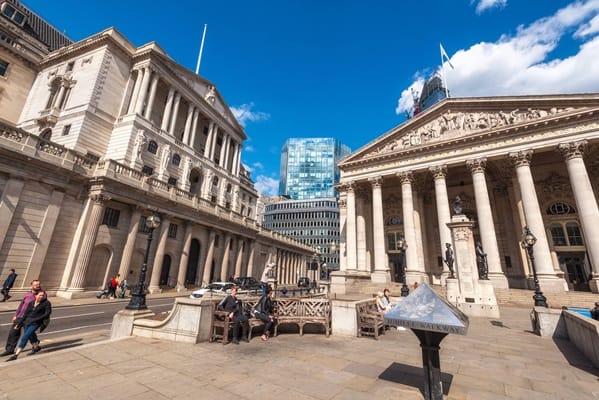
The Bank of England has opted to hold interest rates at 3.75%, signalling a cautious stance as policymakers weigh the economic fallout from escalating instability in the Middle East.
The Monetary Policy Committee voted eight to one in favour of maintaining the base rate, with only one member pushing for an increase. The decision had been widely anticipated by economists, many of whom warned that rate-setters were unlikely to move while assessing the impact of the Iran conflict on energy markets, inflation and global growth.
Before the outbreak of hostilities on 28 February, financial markets had priced in what would have been the first rate cut of the year, with expectations that borrowing costs could have been reduced to 3.5%. That shift now appears firmly on hold as geopolitical risks dominate the outlook.
The Bank’s decision comes at a delicate moment for the UK economy, which has been grappling with uneven growth, stubborn price pressures and weakening consumer confidence. Rising oil prices, driven by fears of disruption in the Gulf, have added a fresh layer of inflation, complicating the path to monetary easing.
By holding rates steady, the Bank is signalling that it is not yet convinced inflation is sufficiently contained to justify cutting borrowing costs, particularly with energy-driven price volatility still feeding through into household bills and business input costs.
Nigel Bishop of buying agency Recoco Property Search said: “With inflation on the rise and ongoing political uncertainty, a rate cut was highly unlikely.
“Some mortgage-dependent buyers might decide to stall their search for the time being whilst others; particularly cash buyers; will cease the opportunity of a less competitive property market.”
The base rate remains a key benchmark for the wider financial system, influencing everything from mortgage pricing to business lending and credit card interest rates. The decision is therefore likely to be felt quickly across the economy, even if the policy stance itself remains unchanged.
For savers, the pause offers a degree of stability. Returns on deposits are expected to remain broadly steady in the near term, with some institutions potentially using the continued higher-rate environment to compete for customer balances.
Borrowers face a more difficult outlook. Mortgage holders on variable or tracker deals will see little immediate relief, while those seeking new loans may continue to encounter elevated rates as lenders price in ongoing uncertainty and funding costs.
The Bank is understood to be closely monitoring developments in global energy markets, where recent volatility linked to the Iran conflict has raised concerns about renewed inflationary pressure. Higher oil prices feed directly into transport and production costs, with the potential to slow progress towards the 2% inflation target.
At the same time, policymakers remain aware that the UK economy is still fragile, with growth subdued and households under strain from years of high borrowing costs. That tension between controlling inflation and supporting activity continues to shape the Committee’s cautious approach.
Economists said the split vote highlighted a lack of consensus on the timing of any future policy shift, with some members more concerned about persistent inflation risks while others are increasingly focused on weakening demand.
Markets will now turn their attention to upcoming economic data and the Bank’s forward guidance for clues on whether rate cuts remain on the horizon later in the year. For now, however, policymakers appear firmly in wait-and-see mode, prioritising stability in an increasingly unpredictable global environment.


Leave a Comment